
A local guide to an Amsterdam weekend from Ireland: what feels familiar, what is different and how to make the most of a short city break.
Written by Alexandra, Founder of Who Is Amsterdam
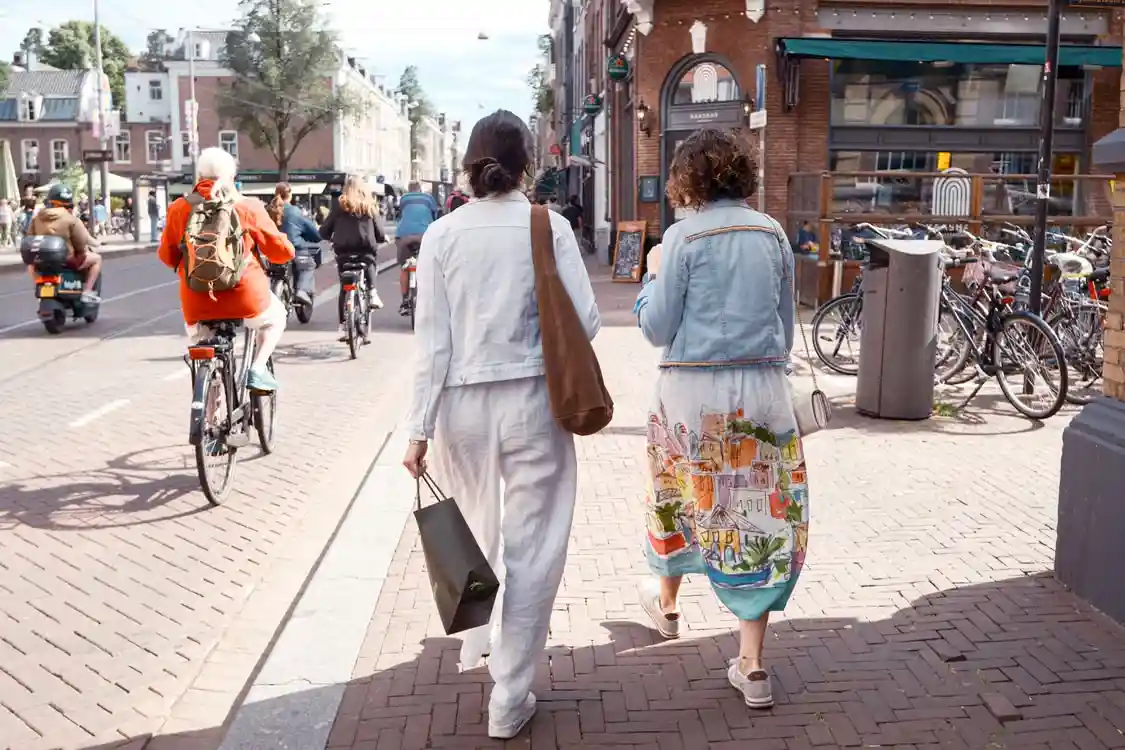
Amsterdam makes sense as a short trip from Ireland.
The flight is short. The currency stays the same. EU roaming usually follows you.
English is widely spoken. The centre is compact enough to explore without hiring a car, learning a new currency or turning the weekend into a transport project.
The weather is also familiar enough that nobody needs to explain the emotional importance of carrying a raincoat in July. Irish visitors understand the assignment.
Then you arrive.
Someone rings a bicycle bell behind you. A tram appears from an angle you had not considered. Your hotel staircase seems to have been designed during a national timber shortage.
Welcome.
This is not a generic list of Amsterdam attractions with Ireland added to the title. It is a guide to the things that feel genuinely different when you arrive from Ireland: Dutch brown cafés and borrel culture, direct communication, bicycles with right of way, electronic music, storytelling, Ajax, Indonesian and Surinamese food, and a city that can fit a remarkable amount into one weekend without requiring a car.
Why Amsterdam Works So Well for a Weekend From Ireland
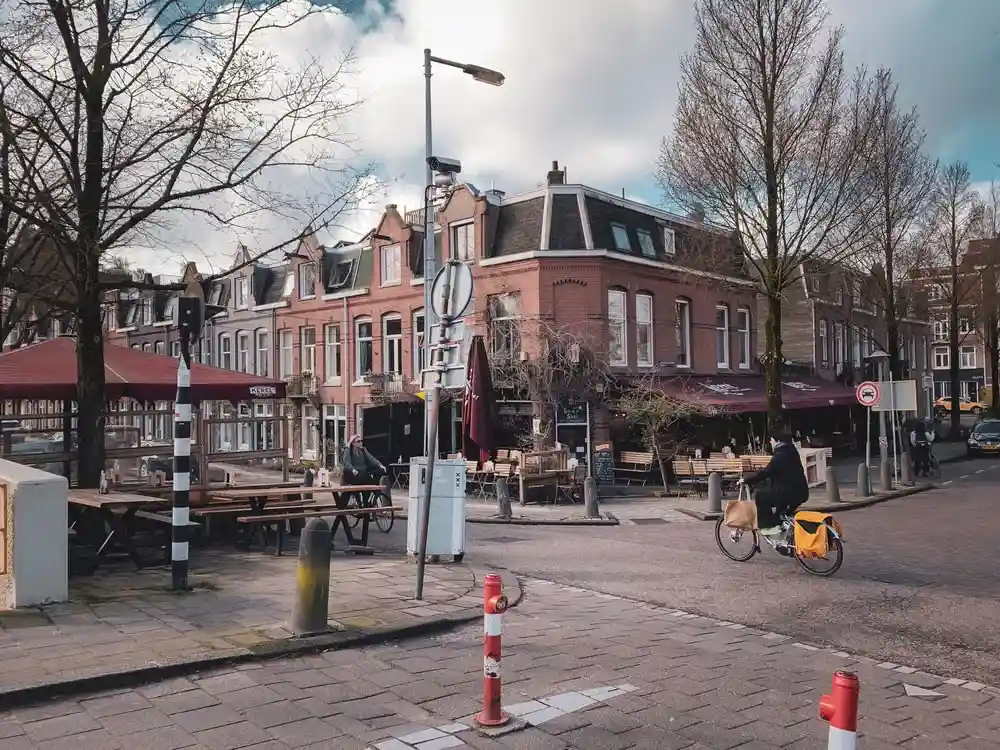
Amsterdam is one of the easiest European city breaks from Ireland because many of the practical barriers are already removed.
Ireland and the Netherlands both use the euro. Irish mobile customers generally benefit from EU roaming rules, subject to their provider’s fair-use policy. Eligible travellers can bring a European Health Insurance Card, although it does not replace travel insurance. Irish citizens can travel with a valid passport or Irish passport card; check the latest official travel advice before departure.
Schiphol Airport has a direct train connection to Amsterdam Centraal. Once you arrive, most of the historic centre is walkable and trams cover the distances that stop feeling charming after 20,000 steps.
The lack of friction creates one temptation: assuming the trip needs no planning at all.
It needs a little. The Anne Frank House and major museums use timed tickets, while popular restaurants, concerts and club nights can fill up. Book the things you would be genuinely disappointed to miss. Leave the rest flexible.
Two nights can work. Three nights are better. Amsterdam is compact, but it is not obliged to fit neatly into your Ryanair cabin bag.
Start With a Tour That Makes the City Click
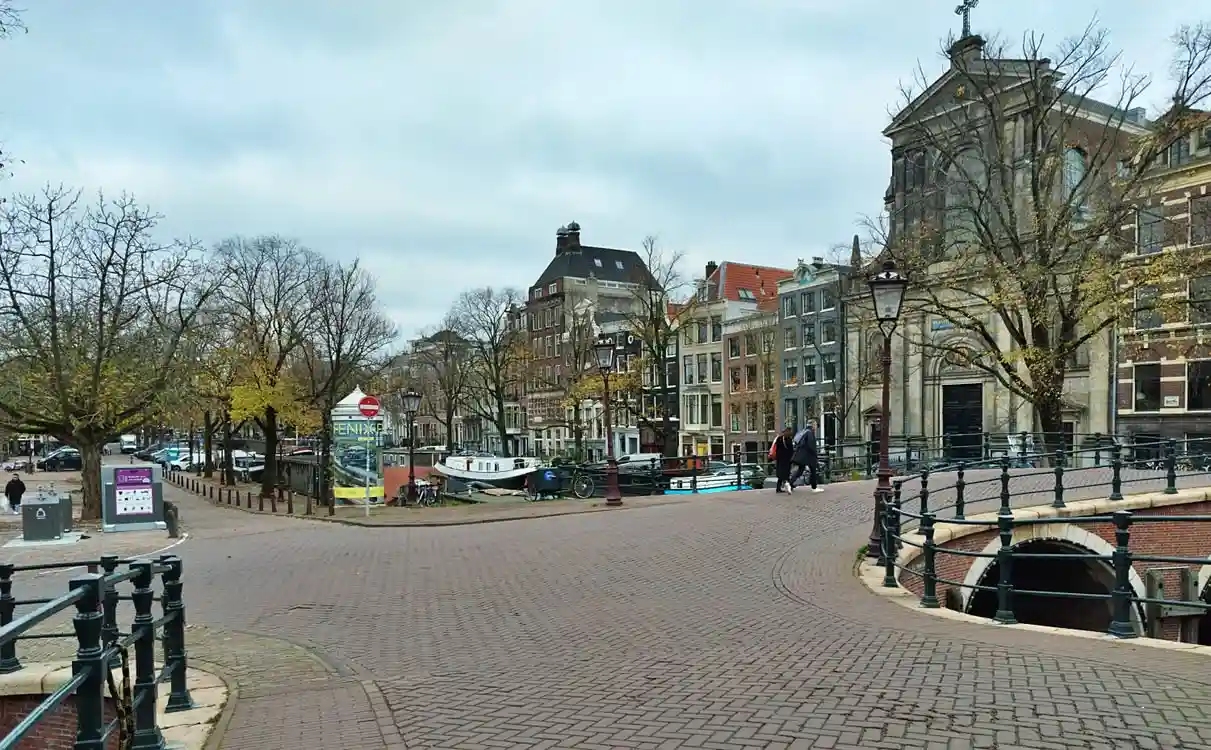
The centre is beautiful even when you know nothing about it. It is better when you understand why the houses are narrow, why some lean forward, what the roof hooks were for and how a city built on wet ground became one of Europe’s great trading centres.
Our Hello Amsterdam Walking Tour is a two-hour introduction to the historic centre, canal belt, Dutch culture, architecture and daily life. It starts at Dam Square and finishes near Westerkerk and the Anne Frank House, making it ideal for Saturday morning or early in the trip.
You do not need someone to lead you around all weekend. You need someone to make the city click once. After that, the streets connect more easily and the details stop looking like attractive background scenery.
Irish Pub Culture Meets the Dutch Brown Café
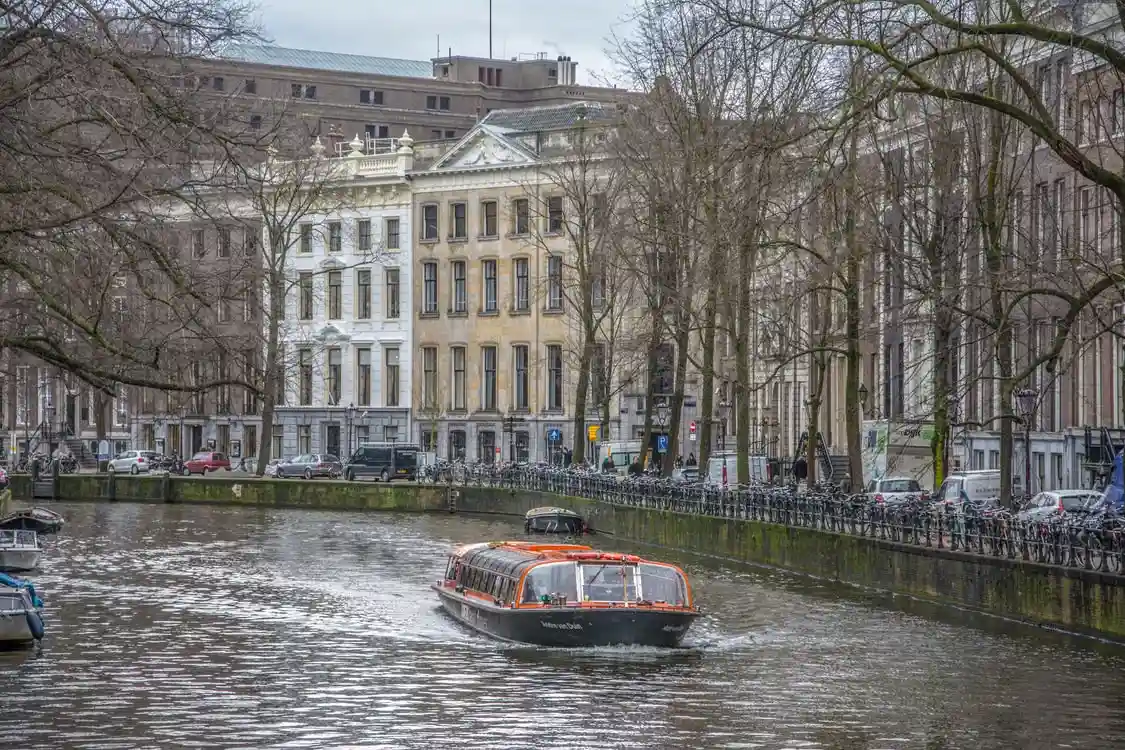
A Dutch brown café is not an Irish pub with fewer televisions.
There are similarities. Both can be neighbourhood institutions with regulars, familiar faces and tables where people settle in to talk rather than perform a rapid drink-and-depart operation. An Irish visitor will understand the social purpose immediately.
The differences are in the rhythm. In Amsterdam, you will often encounter the borrel: drinks in the late afternoon or after work, usually with bitterballen, cheese, nuts or other borrelhapjes on the table. The second the sun produces half a ray of encouragement, everyone moves outside to a terrace and behaves as though summer has been officially declared.
Service can feel different too. Staff may leave you alone for longer than you expect, and you will generally ask for the bill when you are ready. Nobody has forgotten you.
You have been granted peace.
In the Jordaan, Café ’t Smalle and Café Papeneiland are well-known places to try.
Order a drink, add a plate of bitterballen and let the café be the plan rather than somewhere you rush through on the way to the next attraction.
Dutch Directness: It Usually Is Not Personal
Irish communication can involve humour, politeness, implication and a generous amount of social cushioning. Dutch people are somewhat less committed to the cushioning.
If you ask a Dutch person whether they like something, there is a reasonable chance they will simply tell you no. That does not automatically mean they are annoyed or rude. Directness is often treated as practical and honest: saying what you mean prevents everyone from having to decode it later.
If an Irish person tells you something is ‘grand’, you may need additional evidence to determine whether it is actually grand. A Dutch person is less likely to leave you guessing.
Of course, sometimes somebody is simply rude. Amsterdam has those people too. The useful rule is not to interpret every blunt answer as hostility, and not to abandon your own sense of humour in response.
Walk the Canals and Respect the Bike Lanes
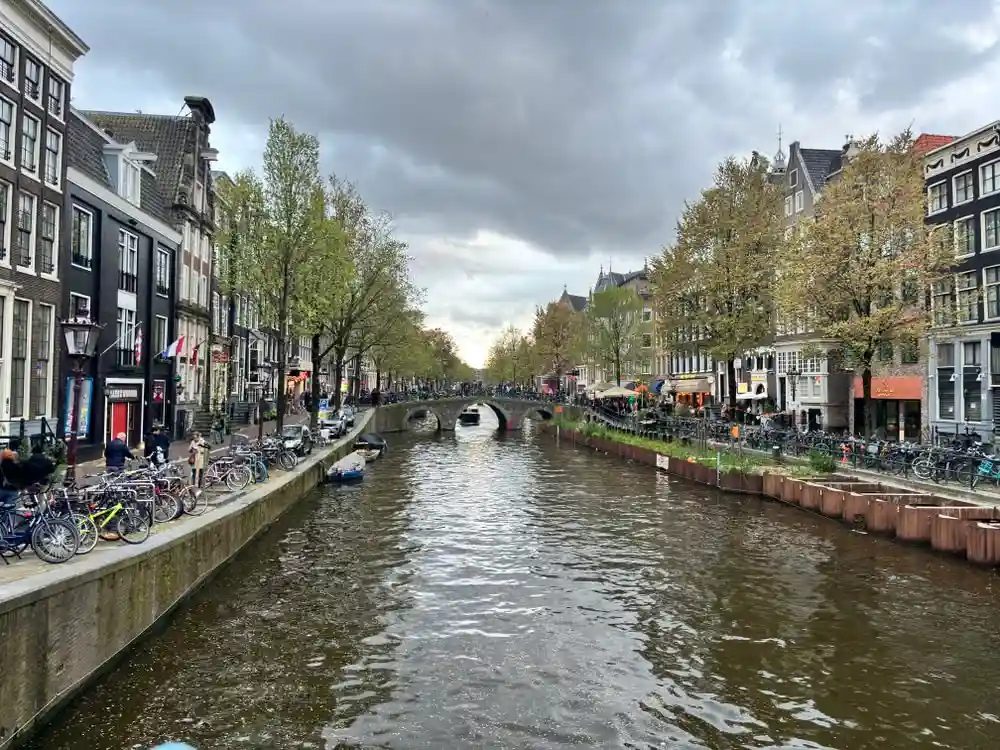
Amsterdam rewards walking. Start near Centraal Station, head towards Brouwersgracht and follow the western canal belt through Herengracht, Keizersgracht or Prinsengracht. Look above eye level for gable stones, roof hooks, old warehouse doors and decorative façades built by merchants who wanted the neighbours to understand that trade had gone well.
Our guide to Amsterdam’s most beautiful canal walks gives you routes without requiring you to follow a group all afternoon. A canal cruise is also worth doing on a first visit because the city’s shape makes more sense from the water.
Cycling culture will feel different from Ireland, but renting a bike is not compulsory. If you are an experienced and confident city cyclist, it can be a brilliant way to explore. If you are not, walk and use public transport. Amsterdam is extremely walkable and nobody awards a medal for learning Dutch traffic conventions during a two-night break.
As a pedestrian, treat bike lanes like roads. Look both ways, cross decisively and do not stop in one to check a map. A bicycle bell normally means move, not begin a discussion about who arrived first.
Amsterdam Weather: You Know Rain, but Watch the Wind
Irish visitors do not need a lecture about changeable weather or waterproof layers.
The difference worth mentioning is Amsterdam wind. It comes across open water and along canals with enough determination to make an umbrella briefly decorative and then permanently inverted.
A good rain jacket is usually more useful than an umbrella on a windy day. If the forecast turns properly wet, our guide to what to do in Amsterdam when it rains covers museums, cinemas, cafés and other indoor options that do not feel like consolation prizes.
What to Eat: Beyond Potatoes and Tourist Pancakes
Traditional Dutch food is hearty and practical. The existence of potatoes is unlikely to shock an Irish visitor.
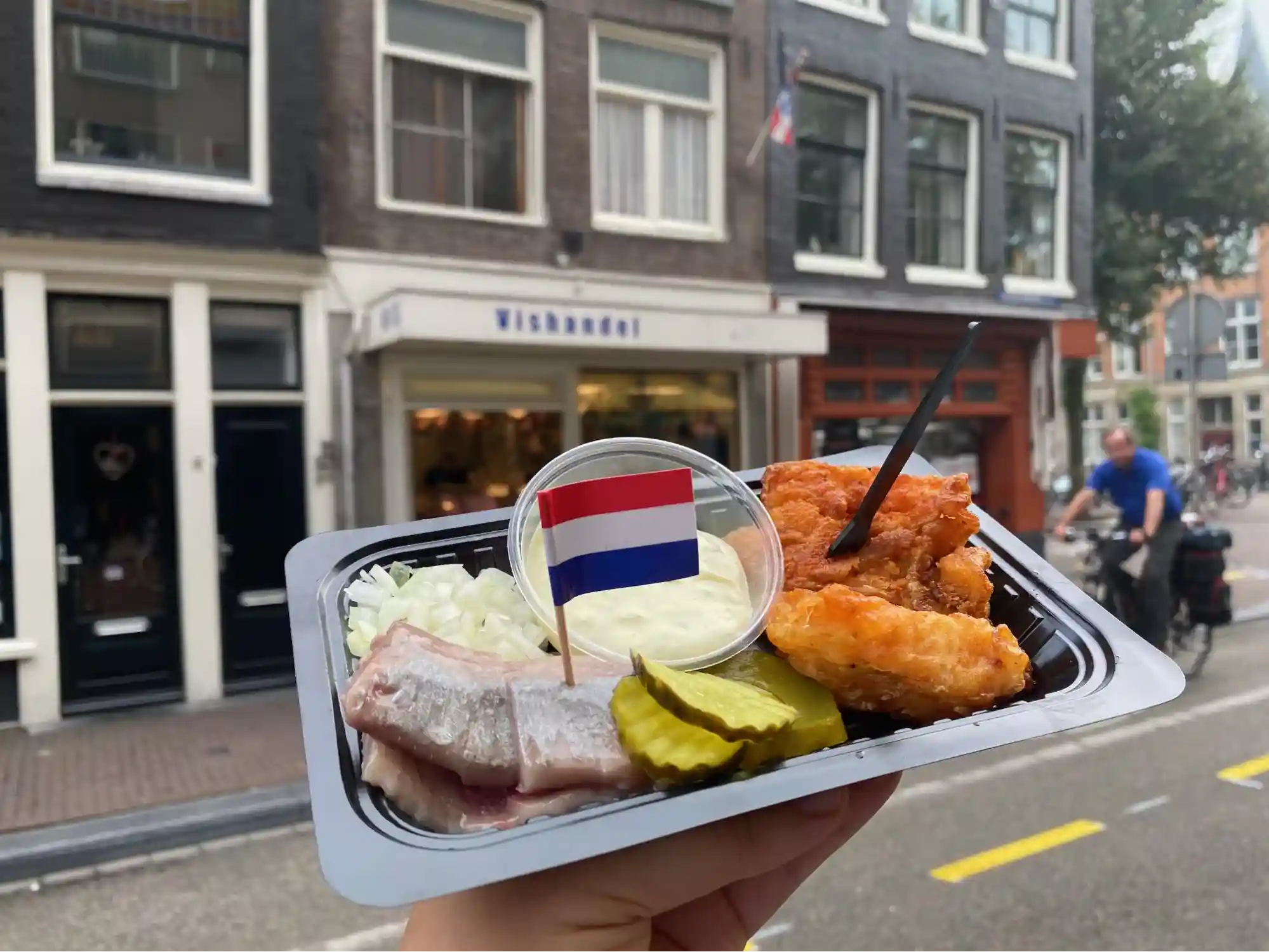
The more useful starting points are bitterballen with a borrel, a kroket in bread, Dutch cheese and—if you are curious—raw herring with onions and pickles. At Albert Cuyp Market, try kibbeling or a warm stroopwafel made at the stall rather than buying the first oversized sweet thing displayed beside Dam Square.
Then look beyond food marketed as traditionally Dutch. Indonesian and Surinamese cooking are essential parts of Amsterdam’s food culture, shaped by migration and the Netherlands’ colonial history. A rijsttafel, Surinamese roti or broodje pom can tell you more about the city than another plate of chips near the station.
For a ready-made neighbourhood route, the Self-Guided Food Tour de Jordaan and Self-Guided Food Tour de Pijp combine food stops, local stories and map links while letting you choose what to buy. Groups can also book a Private Jordaan Food Tour or Private De Pijp Food Tour.
Our guide to the best food markets in Amsterdam covers Albert Cuyp Market, Dappermarkt, Noordermarkt and other places where lunch can involve more movement and fewer menus.
Choose Your Kind of Amsterdam Night Out
Irish visitors do not need the concept of going out for drinks explained. What is useful is understanding how Amsterdam does it differently.
Leidseplein and Rembrandtplein are busy, convenient and full of bars and clubs, but they are not the whole of Amsterdam nightlife. A better evening might begin with a borrel in a brown café, continue with music or storytelling and end in a neighbourhood bar where nobody is dressed as a traffic cone.
Brown cafés, terraces and neighbourhood bars
For a traditional Dutch social evening, stay around the Jordaan. For terraces, bars and restaurants with more local neighbourhood rhythm, look at De Pijp, Oost and Oud-West. Kitchens can close earlier than Irish visitors expect, so eat before the evening becomes a democratic debate about whether crisps count as dinner.
Live music
Paradiso is a concert venue inside a former church and is worth seeing even before the band begins. Melkweg has concerts, club nights and cultural events. For jazz, check Bimhuis or Jazz Café Alto. Always check the programme and book ahead when an event matters to you.
Storytelling and spoken word
A night out in Amsterdam does not have to mean a pub or club. It can mean sitting in a room listening to people tell stories.
Mezrab brings people together through storytelling, spoken word, music and different cultural backgrounds. Tellers Playground is another strong place to look for live storytelling events. Both offer the sort of evening built around people, culture and connection rather than a list of bars.
Electronic music and clubs
Amsterdam is a major electronic music city. The Netherlands has produced some of the world’s best-known DJs, and Amsterdam Dance Event turns the city into a vast programme of performances, talks and parties each October.
Research the night rather than choosing a club only because it is near your hotel. Tickets, door policies and music styles vary. The right event can be one of the highlights of the weekend; the wrong one can become an expensive lesson delivered at 2:00 a.m.
Ajax and Dutch Football Culture
Not every Irish visitor cares about football, but the overlap is strong enough that Ajax deserves more than a passing mention.
Johan Cruijff shaped Ajax, Dutch football and the modern game far beyond Amsterdam. The Johan Cruijff ArenA is home to Ajax and offers stadium tours when fixtures allow. If a match lines up with your weekend, use official ticket channels and check availability early; popular games can be difficult to access.
You can check fixtures, ticket information and stadium tours through the official Ajax website and Johan Cruijff ArenA website. Even without a match, the stadium gives football supporters a different route into the city’s identity.
Choose One Major Museum and Book It Early

For most first visits, the main choice is between the Rijksmuseum and Van Gogh Museum. Do one properly rather than marching through both while thinking mainly about coffee and lower-back support.
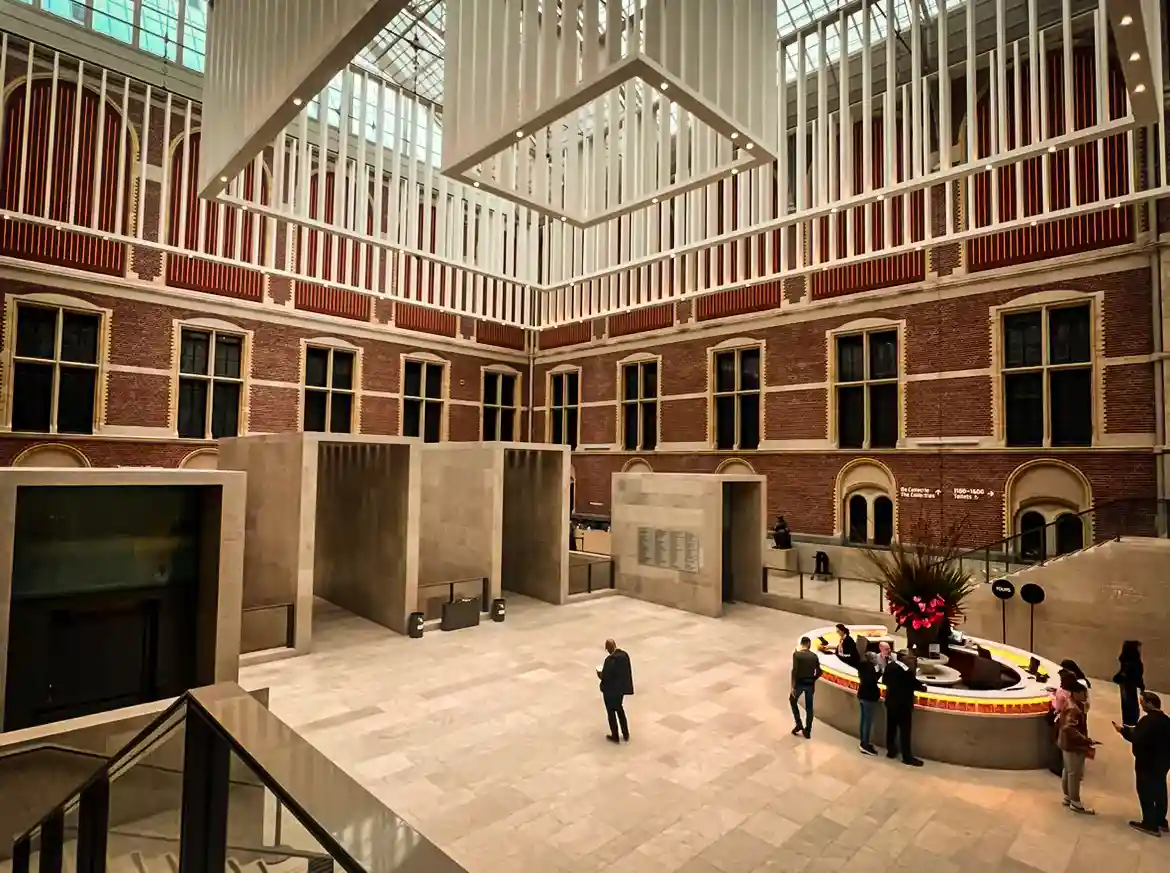
The Rijksmuseum covers Dutch art and history across several centuries. Book a timed entry through the official Rijksmuseum website. If you want the paintings connected to the people, politics and wealth behind them, our Private Rijksmuseum Tour turns the art history into a more human story.
The Van Gogh Museum follows the artist’s development in a more concentrated collection. Tickets are timed and available through the official Van Gogh Museum website.
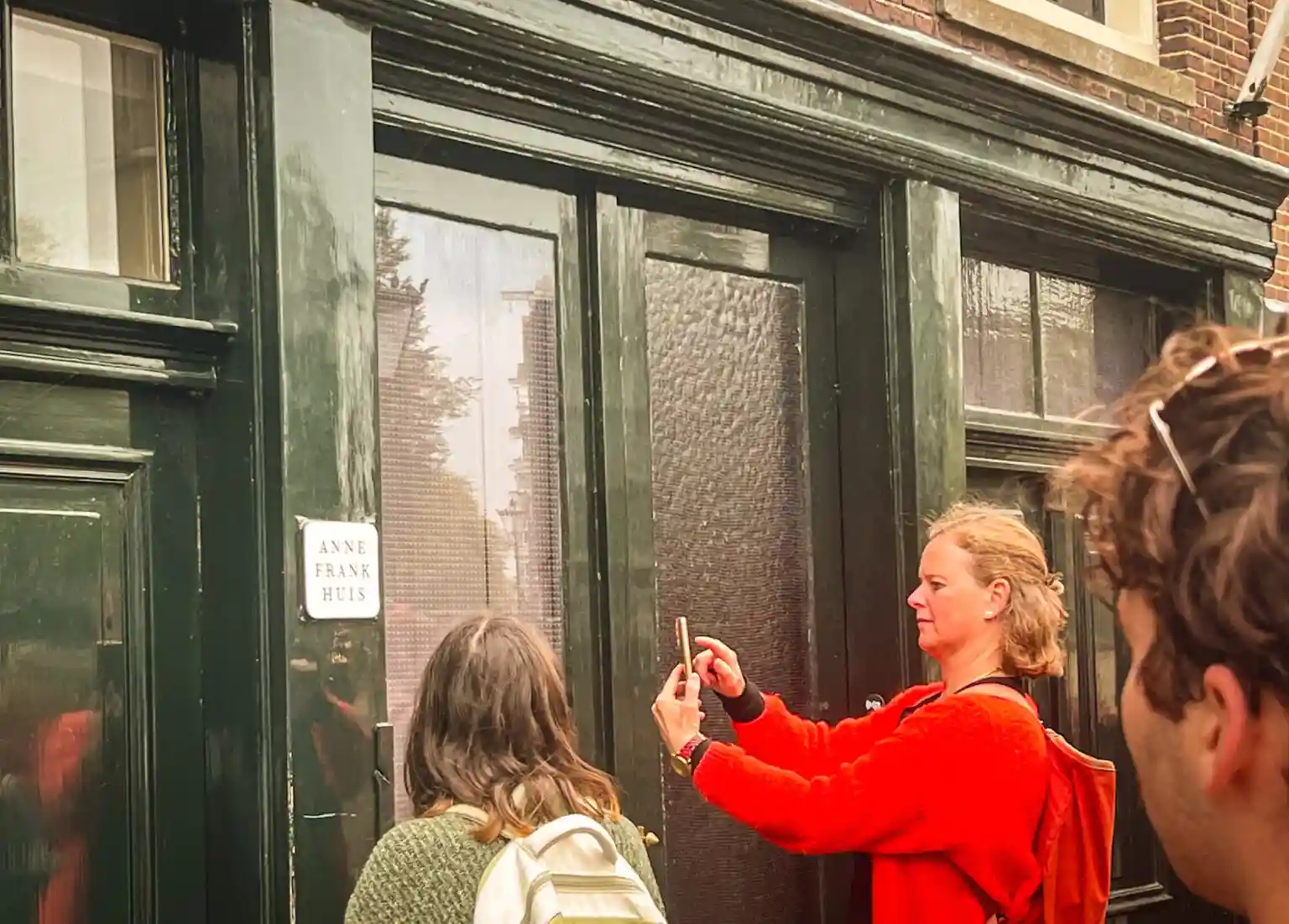
The Anne Frank House also requires planning. Tickets are sold through the official museum website and popular dates sell quickly. If your date is sold out, read our guide to last-minute Anne Frank House tickets.
A Proper Amsterdam Weekend Itinerary From Ireland
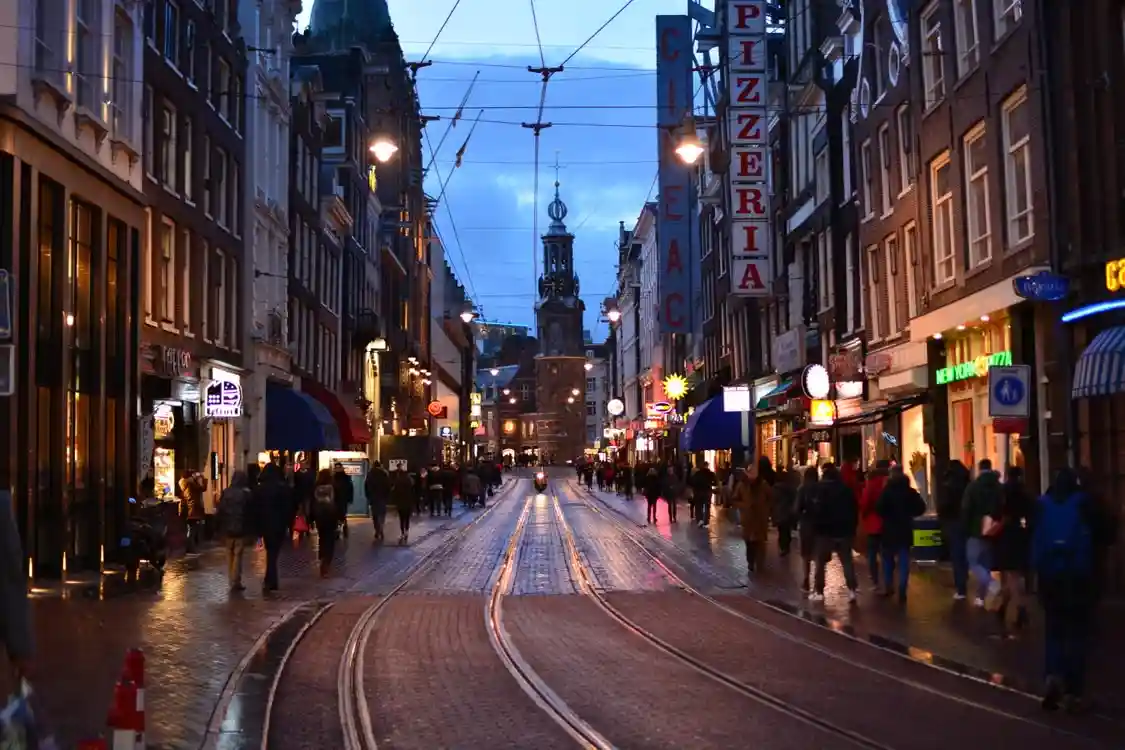
This itinerary is designed around the way many Irish visitors actually arrive: Friday to Sunday, with flight times deciding how much of each day survives. Move the sections around as needed, but keep the rhythm—orientation, one major cultural booking and enough unplanned neighbourhood time for the weekend to breathe.
Friday: Arrive, Find the Canals and Choose Your Evening
Take the train from Schiphol to Amsterdam Centraal, check in and get your bearings on foot. If daylight and energy allow, walk the canal belt or take a canal cruise. It is an easy introduction that does not require museum-level concentration after travelling.
Have dinner in the Jordaan, De Pijp or Oud-West. Then choose the kind of evening you actually want: a brown café and borrel, live music at Paradiso or Melkweg, storytelling at Mezrab or Tellers Playground, or an electronic event you booked in advance.
Do not attempt all four. Friday night enthusiasm has been responsible for many decorative Saturday mornings.
Saturday: Understand the City, Then Go Deeper
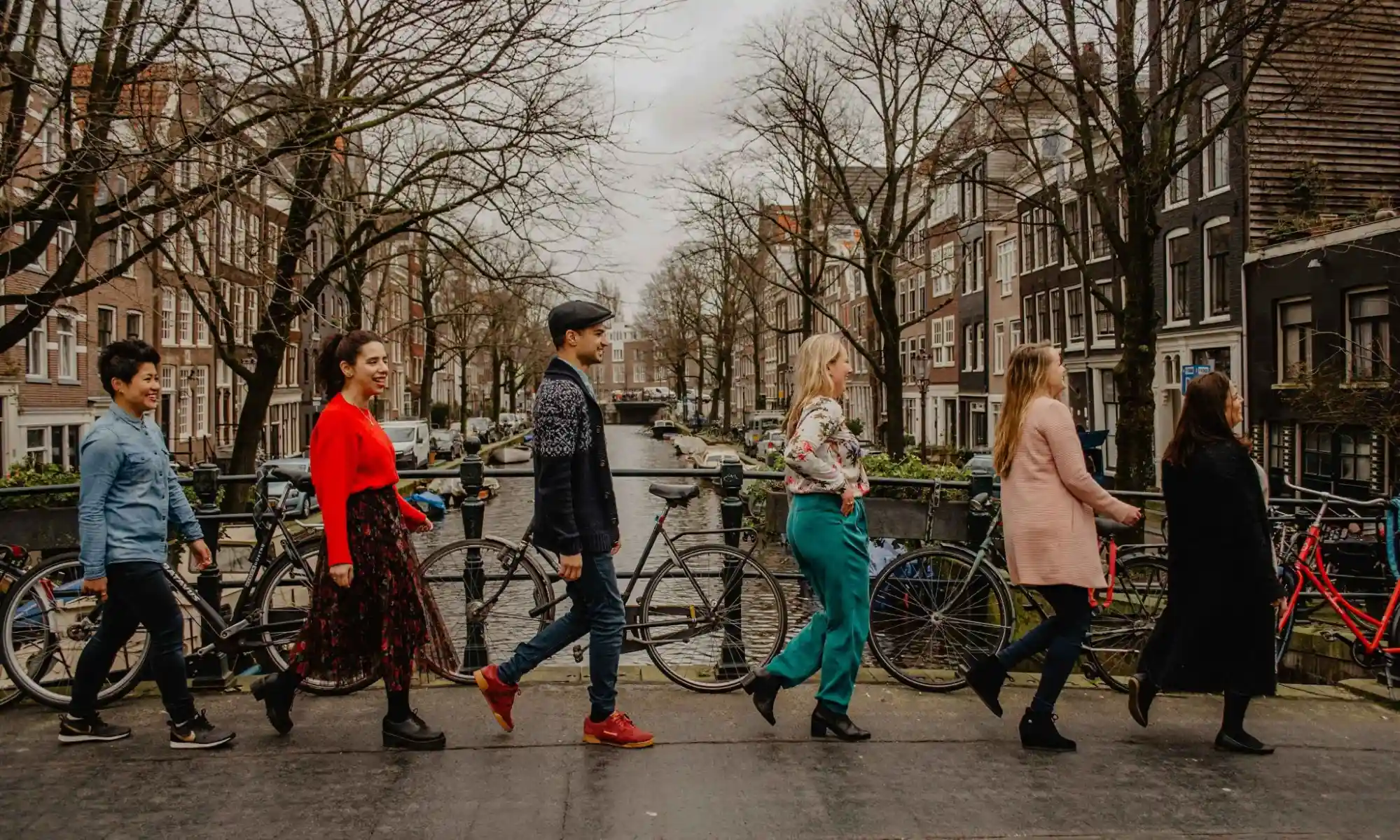
Start with the Hello Amsterdam Walking Tour so the canals, architecture and local habits make sense early. Afterwards, stay around the Jordaan for lunch or follow the Self-Guided Food Tour de Jordaan.
Choose one major afternoon booking: the Rijksmuseum, Van Gogh Museum or Anne Frank House. If museums are not your priority, spend the time in De Pijp, at Albert Cuyp Market or walking the western canals.
In the evening, do the Amsterdam night out you did not choose on Friday. That might be jazz at Bimhuis, a concert in a former church, a neighbourhood terrace, storytelling or a proper club night. Nightlife here is a menu, not an instruction to report to Leidseplein.
Sunday: Slow Breakfast, Local Culture and Home

Start slowly. Visit Noordermarkt if it matches the day, walk through De Pijp or take the free ferry behind Centraal Station to Noord. The Buiksloterweg ferry takes you towards EYE Filmmuseum and A’DAM Lookout; the longer NDSM ferry reaches the former shipyard, street art and waterside spaces.
If your flight is late enough and you want more depth, the Humans of Amsterdam Cultural Walking Tour explores the city through local encounters, stories, food and drinks. Otherwise, choose one final walk, café or cultural stop and leave enough time to reach Schiphol without turning the end of the weekend into competitive sprinting.
For more detail on timing, read our guide to how many days to spend in Amsterdam.
How to Keep the Weekend Within Budget

Irish visitors are unlikely to be shocked by the existence of an expensive pint, but Amsterdam accommodation, attractions and meals can still build quickly.
Decide what deserves money. Spend on the museum, tour, match or concert you genuinely care about, then balance it with canal walks, markets, neighbourhoods and the free ferry to Noord.
Our guide to Amsterdam on a budget covers transport, affordable food and ways to avoid central-tourist prices. Do not save a small amount on a hotel so far outside the centre that every journey becomes a three-connection expedition.
Practical Tips for Irish Travellers
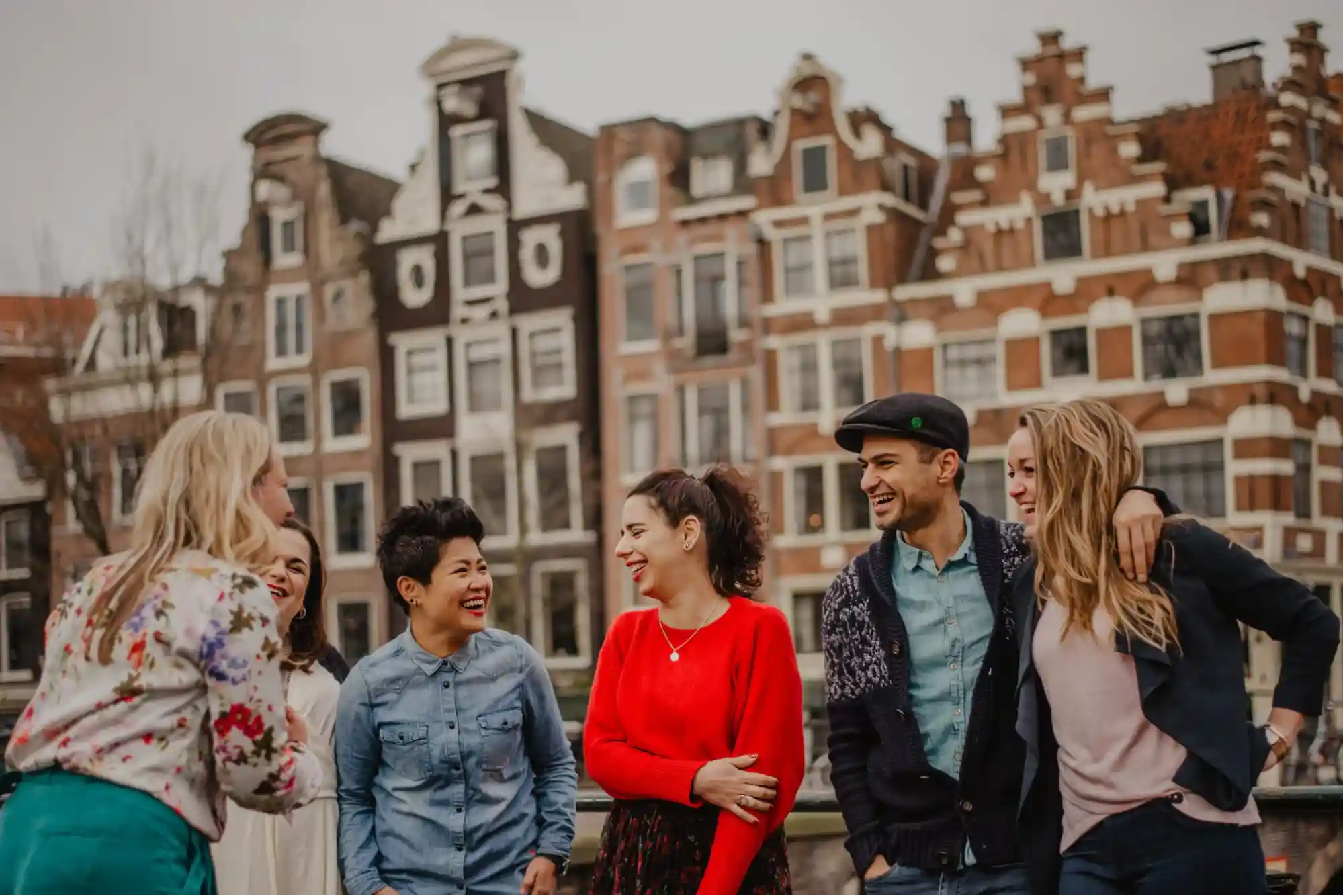
Use a contactless bank card or phone for public transport and check in and out with the same card or device. Our Amsterdam public transport guide explains trams, metros, ferries and ticket options.
Ask for the bill when you are ready. Bring a waterproof jacket and take the wind seriously. Look for bicycles before crossing anything that resembles a path. Do not photograph sex workers in the Red Light District, and never buy drugs from people on the street.
Amsterdam is open-minded but structured; relaxed but busy. It is also a lived-in city full of people going to work, taking children to school and trying to cross a bridge while you arrange six friends for a photograph.
Give it enough respect to notice that. It gives plenty back.
Frequently Asked Questions
Yes. Irish citizens can enter the Netherlands with a valid Irish passport or Irish passport card. The document must be valid for the trip. Check the latest Department of Foreign Affairs travel advice for the Netherlands before departure.
Yes, when eligible. A valid European Health Insurance Card gives access to medically necessary state-provided healthcare during a temporary stay in another EU country under the applicable local conditions. It does not replace travel insurance because private treatment, repatriation and some additional costs may not be covered. See Ireland’s official EHIC guidance.
Usually. Irish mobile customers generally benefit from EU roaming rules in the Netherlands, subject to their provider’s fair-use limits and plan terms. Check with your provider before travelling, particularly if you have unlimited data. The EU’s roaming guidance explains the general rules.
No. Experienced cyclists may enjoy it, but Amsterdam is easy to explore on foot and by public transport. If you are not comfortable cycling in busy urban traffic, walking is the better choice.
Report the loss or theft and contact the Embassy of Ireland in the Netherlands. Consular staff may be able to help with an emergency travel document when necessary. Keep copies of your travel documents and insurance details separate from the originals.