
A local’s guide to making the most of public transport in Amsterdam.
Written by Alexandra, Founder of Who Is Amsterdam
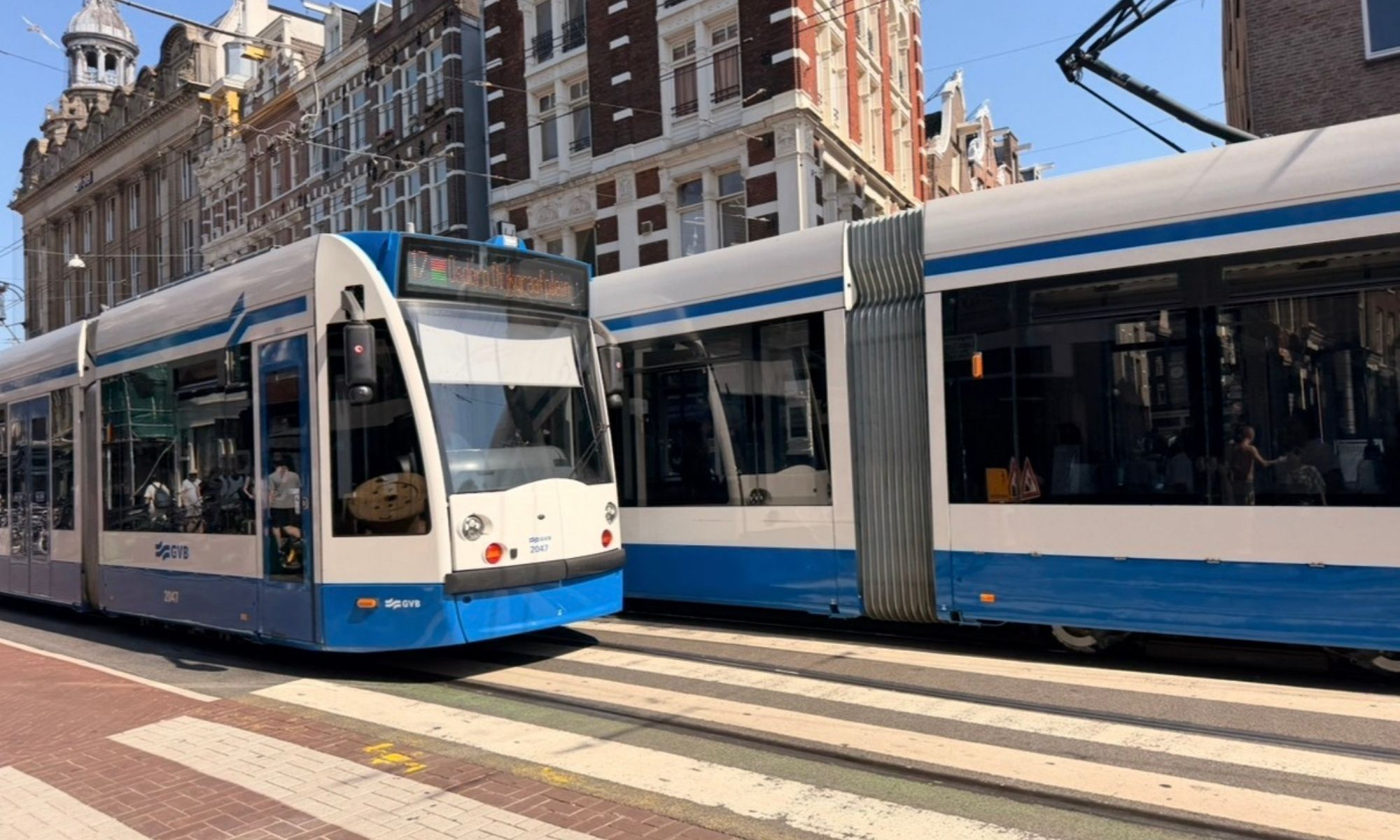
You know that tiny moment when you land in a new city, step outside the station, and immediately pretend you understand everything?
Amsterdam loves that moment.
There’s a tram dinging at you. A cyclist appears from nowhere, probably born with right of way. Someone taps a bank card on a machine like they’ve done it since infancy. And you’re standing there with your suitcase, trying to look casual while your brain is just: bus? tram? train? help?
Good news. Amsterdam public transport is actually very easy once you know the basics.
Annoyingly easy, even.
First: what counts as public transport in Amsterdam?
Amsterdam has trams, buses, metro lines, trains and ferries. The main city transport operator is GVB, which runs most of the trams, city buses, metro services and ferries you’ll use inside Amsterdam.
The tourist version is basically this:
- Trams are best for the city centre.
- Metro is best for longer jumps, like Noord, Zuid or Bijlmer.
- Buses fill in the gaps.
- Trains are best for Schiphol Airport and other Dutch cities.
- Ferries take you across the IJ river, and yes, the main ones are free. Little Amsterdam miracle.
The easiest way to pay: tap in and tap out
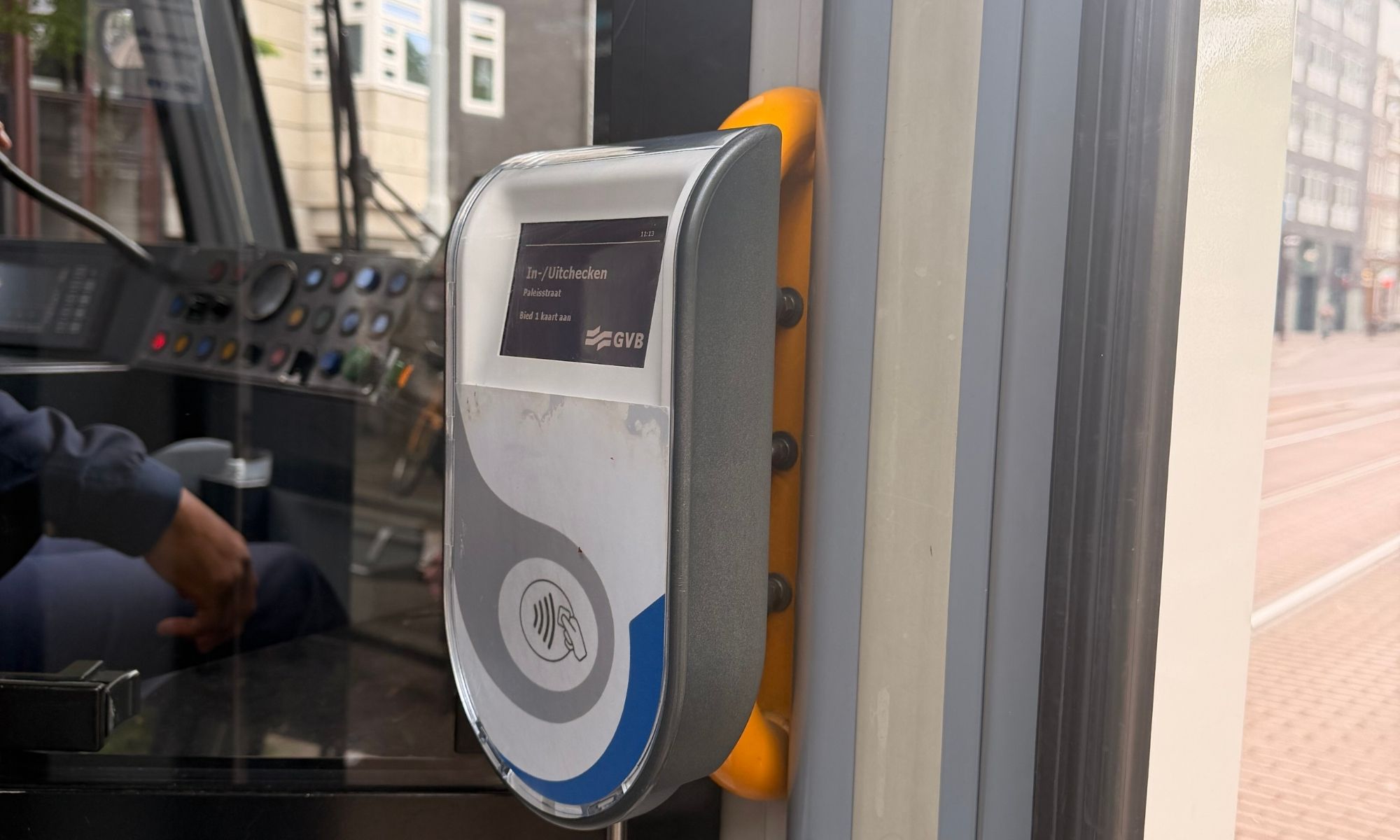
For most tourists, OVpay is the simplest option. You use a contactless debit card, credit card, phone or smartwatch to check in when you board, then check out when you leave. No separate transport card. No top-up machine drama. No standing there pressing “English” with the energy of someone defusing a bomb.
Important bit: use the same card or device to check in and out.
So if you tap in with Apple Pay, tap out with Apple Pay. Not your physical card. Not your watch. Not the card floating loose in your bag like a little chaos pancake.
For GVB rides, there is also a daily spending cap when you use OVpay. As of June 2026, I amsterdam lists the GVB Max cap at €10.50 per day for GVB trips.
When a GVB day ticket makes more sense
If you’re planning a full tourist day, museums, lunch, hotel break, canal wander, dinner somewhere you “just found” but actually saved on Instagram three months ago, a GVB day or multi-day ticket can be calmer.
GVB day and multi-day tickets give unlimited travel on GVB routes, day and night, and they become active the first time you check in.
Use this if you’re mostly staying inside Amsterdam and taking a lot of trams, buses or metro rides.
Tiny catch: GVB tickets are for GVB transport. They do not cover most trains or regional buses. That’s where tourists get betrayed by confidence.
Coming from Schiphol Airport?

From Schiphol Airport, the train is usually the cleanest option if you’re going to Amsterdam Centraal. The station is directly underneath the airport terminal, which feels suspiciously convenient, but we accept the gift. I amsterdam says trains run frequently between Schiphol and Amsterdam Central Station, with the journey taking around 17 minutes.
There’s also the Amsterdam Airport Express bus, line 397, which is handy if you’re staying near Museumplein, Rijksmuseum or Leidseplein. It runs from Schiphol to key stops in the city, while the night version is N97.
Here’s the simple rule:
If your hotel is near Centraal, take the train.
If your hotel is near Museumplein or Leidseplein, check the airport bus.
If you bought a city-only GVB ticket, don’t assume it covers Schiphol by train. It probably doesn’t. Rude, but true.
Which Amsterdam transport ticket should tourists buy?
Here’s the non-overthinking version.
If you’ll take one or two rides, use OVpay.
If you’ll hop around Amsterdam all day, get a GVB day ticket.
If you’re in Amsterdam for a few days and staying within the city, get a GVB multi-day ticket.
If you want airport travel included, look at the Amsterdam Travel Ticket.
If you’re doing day trips to places like Zaanse Schans, Haarlem, Muiden or the wider Amsterdam area, look at the Amsterdam & Region Travel Ticket. In 2026, I amsterdam lists this ticket at €23 for 1 day, €34 for 2 days and €44 for 3 days.
If you’re doing museums and attractions too, check the I amsterdam City Card. It includes unlimited GVB bus, tram and metro travel in Amsterdam, including night buses, but it does not include NS trains or regional buses like Connexxion and R-net.
Trams: the cute ones tourists love
Amsterdam trams are the main character.
They’re above ground, easy to spot, and weirdly satisfying when they glide past a canal like they’re in a tourism advert but pretending not to be.
You tap in when you board and tap out when you leave. Some trams have a conductor desk, but don’t rely on buying tickets onboard if you can avoid it. Just tap. Be free.
Trams are great for places like Jordaan, De Pijp, Museumplein, Leidseplein, Dam Square and Amsterdam Centraal.
Metro: less romantic, very useful
The metro is not the “pretty Amsterdam” option.
No canal views. No cute bell. No dramatic leaning into old streets.
But it’s fast. And sometimes fast is sexy. Especially when it’s raining sideways and your shoes have become soup.
Use the metro for Amsterdam Noord, Zuid, RAI, Bijlmer ArenA, Amstel, Sloterdijk connections and longer trips across the city.
Ferries: free, fun and deeply underrated
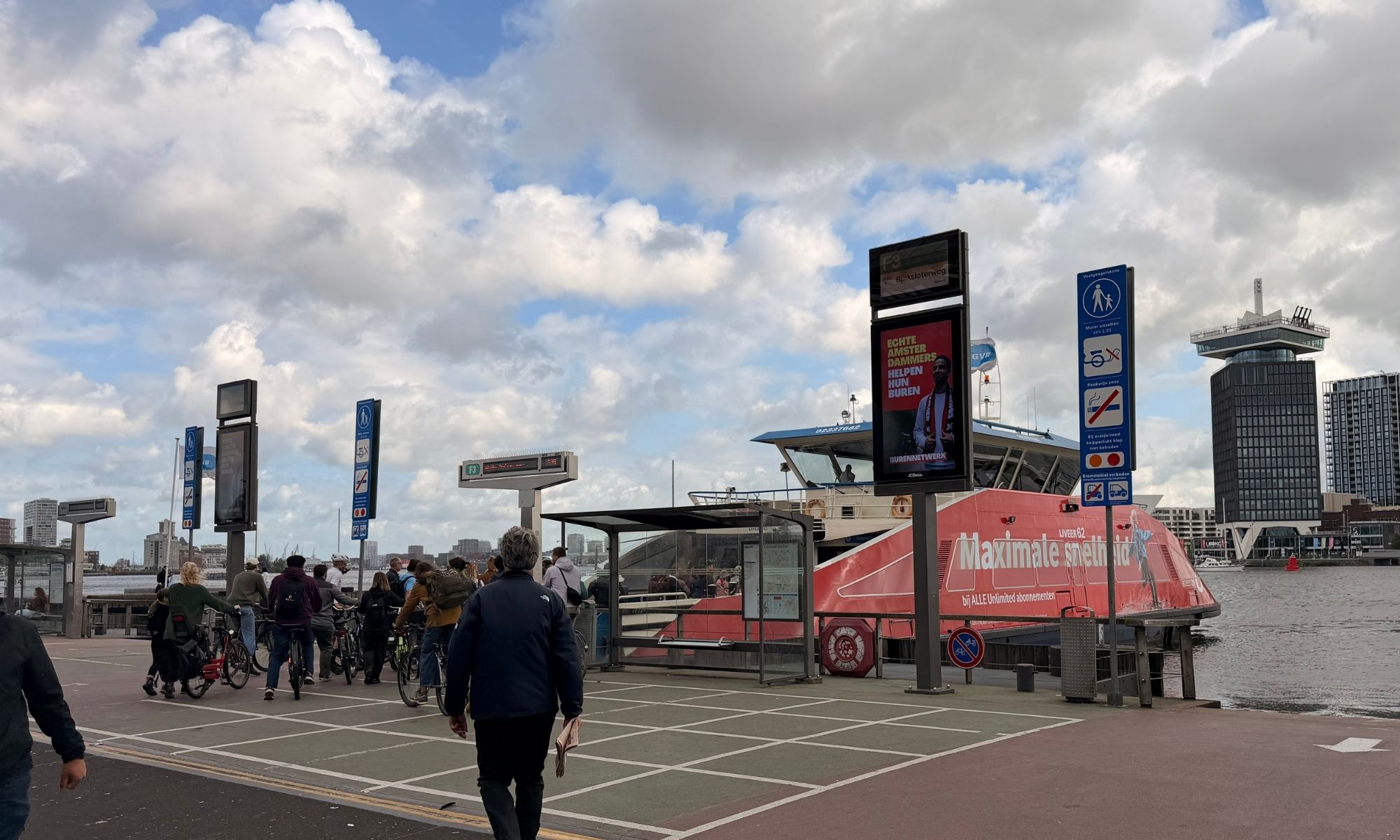
The ferries behind Amsterdam Centraal take you across the IJ river to Amsterdam Noord. The Buiksloterweg ferry is the big one tourists use for A’DAM Lookout, Eye Filmmuseum and Noord in general. I amsterdam notes that Amsterdam ferries provide free connections for pedestrians, cyclists and mopeds across the IJ, with the Centraal to Buiksloterweg route running frequently and through the night.
You don’t tap in. You don’t buy a ticket.
You just walk on.
It feels illegal the first time. It is not.
Night transport: possible, but check before you commit
Trams and metros usually stop after around 00:30, and then night buses take over.
This is the moment where your future self will thank you for checking your route before the second cocktail.
Amsterdam is safe and manageable at night, but public transport gets thinner. Plan it. Or budget for a taxi. Or accept the classic tourist walk home where everyone gets weirdly honest after midnight.
Tiny rules that will save you money
Always check in and check out.
Use the same card or phone.
Don’t tap your whole wallet against the reader unless you enjoy financial mystery theatre.
Remember that trains are different from GVB city transport.
Don’t stand in the bike lane while checking Google Maps. That is how you meet Amsterdam’s least patient residents.
So, is Amsterdam public transport good for tourists?
Yes. Very.
Once you understand the ticket thing, Amsterdam public transport is one of the easiest ways to move around the city. You don’t need a car. You don’t need to cycle unless you want the full “main character with mild danger” experience. You can get almost everywhere by tram, metro, bus, train or ferry.
And honestly, there’s something lovely about it.
You tap in, the tram dings, the canal slides past, and suddenly you’re not “figuring out public transport” anymore.
You’re just in Amsterdam.
Tiny victory. Big mood.
Want to experience Amsterdam with someone who actually lives here? Our walking tours are built on stories, not scripts. Small groups, real conversations, and the kind of local knowledge you can’t Google. Or if you’re looking for something more immersive, the Humans of Amsterdam cultural tour takes you deeper into the city’s stories and the people who live them. See all our tours and start your Amsterdam trip the right way.