
A local look at what Amsterdam costs, and where visitors tend to spend far more than they meant to.
Written by Alexandra, Founder of Who Is Amsterdam
Amsterdam is good at hiding how expensive it is.
You arrive at Centraal Station and the first things you see are canals, bridges and rows of old houses leaning slightly towards the water.
All free.
You walk ten minutes through the centre. Also free.
You stand on a bridge at sunset and briefly feel that you have mastered European travel.
Then you check into the hotel.
The room is smaller than expected. The staircase appears to have been designed for people travelling before suitcases were invented. The final bill contains a tourist tax you had forgotten about.
There it is.
So, is Amsterdam expensive?
It can be.
Accommodation is the part that hurts most. Eating every meal in the busiest streets adds up quickly too. Museums are not cheap enough to visit without choosing carefully, and Amsterdam has plenty of opportunities to spend €15 here, €25 there and eventually wonder how a day involving mostly walking became so financially active.
But there is another side to this.
Amsterdam is small enough to explore on foot. Several of the city’s best neighbourhoods cost nothing to enter. The ferries behind Centraal are free. Markets can cover lunch without restaurant prices. A slow afternoon in Jordaan has no booking fee attached to it.
Amsterdam is expensive to sleep in. It does not have to be expensive to experience.
Hotels are usually where Amsterdam really hurts. Once you are here, however, much of what makes the city beautiful costs nothing: walking the Canal Belt and Jordaan, sitting beside the Brouwersgracht with a coffee, taking the free ferry to Noord, browsing a market, relaxing in a park or watching the sunset from a bridge.
The city itself is one of Amsterdam’s biggest attractions. The aim is not to make every part of the trip cheap, but to spend on the things that genuinely improve it.
I would say it becomes much easier once you know which expenses improve the trip and which ones mainly improve somebody else’s afternoon.
Prices in this guide were checked against current 2026 rates in August.
Is Amsterdam Expensive?
The first question people ask is usually how expensive is Amsterdam compared with other European city breaks.
My answer is: the city becomes expensive before you have done anything.
That is the unusual part.
Accommodation takes the first and largest bite.
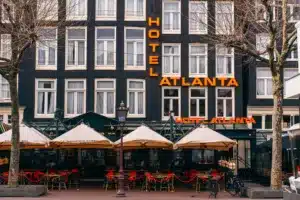
Amsterdam hotel prices move dramatically depending on the neighbourhood, day of the week, season, major events and how early you book. I would be careful with any article promising one “average hotel price” because Amsterdam can behave like two different cities depending on the week.
So when somebody asks me how expensive Amsterdam is, one of my first questions is: when are you coming?
Tulip season, especially April, can be extremely busy and expensive. King’s Day, Pride, Amsterdam Dance Event, major conferences and large concerts can push room prices up considerably, and summer is often expensive too. Sometimes moving a trip by one week makes a surprisingly large difference.
If an event is the reason for your visit, accept the premium and book early. If it is not, compare nearby dates before committing to flights.
A perfectly ordinary room that feels reasonable on a Tuesday can develop enormous confidence by Friday.
For planning purposes, I would test your budget with around €180–€260 per night for a decent mid-range double room rather than building the trip around the lowest price you happened to see in a search result. You may find less. You may find considerably more.
The important number is the final one.
Amsterdam currently charges an Amsterdam tourist tax of 12.5% of the overnight accommodation price, excluding VAT. That applies to hotels, hostels, guesthouses, holiday rentals and other paid overnight stays.
So imagine your room costs €200.
The tax adds €25.
Stay for three nights and the room has gained another €75 before you have ordered breakfast.
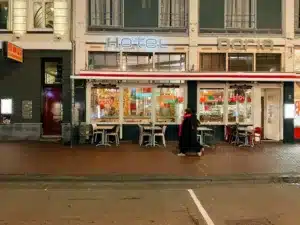
If two people are sharing, that is easier to absorb. Solo travellers feel Amsterdam accommodation much more strongly because there is nobody on the other side of the bed dividing the bill.
This is why I always tell people to solve the “hotel matter” first.
You do not need to stay inside the Canal Belt. Amsterdam is compact, and Oost, West, Zuid and Noord can all work very well. If you are not staying centrally, check the public transport connection rather than judging the hotel only by distance on a map.
Is there a tram or metro nearby? Is the journey direct and easy? How late can you comfortably get back? Are there cafés and restaurants around the hotel?
Saving €40–€50 a night and taking a 15-minute tram can be a fantastic deal. Saving €20 and creating a logistical headache usually is not.
If Amsterdam hotel prices become unreasonable, also compare Haarlem and Zaandam. Both have frequent, short train connections into Amsterdam and can be useful during especially busy periods.
Compare the full cost and convenience, including train fares and the journey back at night. If an Amsterdam hotel is only slightly more expensive, I would usually stay in Amsterdam. When city prices have gone wild, Haarlem or Zaandam can be a genuinely sensible alternative.
Once that is booked, the rest of the Amsterdam trip cost is much easier to control.
A useful starting point per person, including your share of accommodation but excluding flights, is around €100–€150 a day for a careful budget trip, €180–€280 for a comfortable mid-range visit, and €320 or more if you want better hotels, restaurant dinners, drinks and paid experiences without watching every euro.
Those are planning ranges, not laws.
You can spend far more.
Amsterdam will not stop you.
What a Normal Day in Amsterdam Costs
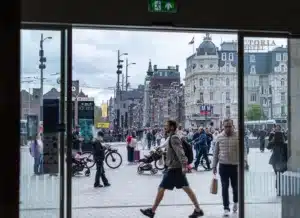
This is where budget articles often become less useful.
They tell you coffee costs X, museums cost Y, lunch costs Z, then leave you holding twelve unrelated numbers and no idea what a normal Tuesday looks like.
So I prefer to walk through one.
You wake up somewhere reasonably central.
Breakfast does not need to be a full brunch production. A bakery, coffee and something warm might cost around €7–€12. If you sit somewhere popular and order eggs, juice and another coffee, you can easily move towards €20 before 10:00.
Then you walk.
This is important.
Amsterdam’s centre is compact enough that transport does not need to appear every time you change neighbourhoods.
Jordaan to the canal belt? Walk.
Museumplein to De Pijp? Walk.
Centraal to Nieuwmarkt? Walk.

The tram is there when you need it, but it is not a compulsory part of sightseeing.
My favourite almost-free Amsterdam experience is an early-morning canal walk.
Get up early, grab a coffee and begin around Brouwersgracht before continuing along Herengracht, Keizersgracht and Prinsengracht. Before the boats get going, the water can be completely still and the canal houses reflect in it. Almost every bench is free, and sometimes it feels as though you have Amsterdam to yourself.
The cost is basically your coffee.
In 2026, a GVB one-hour ticket costs €3.40, a day ticket costs €10 and a three-day GVB ticket costs €21.50. The Amsterdam Travel Ticket, which also covers eligible airport travel, costs €34 for three days.
Our Amsterdam public transport guide explains the ticket choices in more detail. For a budget article, the main point is simpler: if you are walking most of the day, do not automatically buy the biggest transport product.
By late morning, maybe you will visit the Rijksmuseum.
An adult ticket is currently €25. Visitors aged 18 and under enter free, although everyone needs a booked start time.
The Van Gogh Museum is also €25 for a regular adult ticket, while under-18s enter free.
The Anne Frank House is €16.50 for adults, including its €1 booking fee. Tickets are sold for specific time slots and released six weeks ahead every Tuesday at 10:00 CEST.
That means one major museum will usually take around €16–€25 from the day.
Not terrible.
Three museums may be the best €75 you spend if art is the reason you came. The mistake is visiting five because somebody else’s must-see list told you to, rather than choosing the museums you actually care about.
By lunch, I would leave Museumplein or the busiest central streets and eat somewhere that locals also use.
Be smart about where you eat. The same poffertjes or stroopwafel can cost very different amounts at a heavily tourist-oriented counter and at a local market. That does not mean never eating in the centre; it means not assuming that a higher price guarantees better food.
Markets such as Albert Cuyp, Dappermarkt, Lindengracht and Noordermarkt, depending on the day, are excellent places to try Dutch snacks and international Amsterdam food without automatically paying the busiest-street premium.
This is where Amsterdam food prices become much easier to handle.
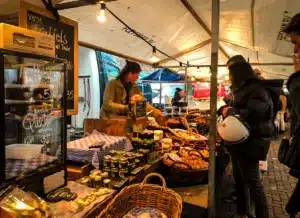
Our current Amsterdam food markets guide includes Albert Cuyp, Dappermarkt, Lindengracht, Noordermarkt and several smaller markets. Many street-food portions at Albert Cuyp come in under €5, while Dappermarkt is especially useful for inexpensive Surinamese, Turkish and Moroccan food.
For planning, I would allow €10–€18 for a casual lunch.
Albert Heijn is also your friend, and not only in an emergency. Pick up Dutch cheese, bread or a fresh baguette, dips, olives, fruit and something to drink, then have a picnic in Westerpark or Vondelpark.
When the weather is good, that can be a nicer lunch than sitting inside a restaurant. You do not need three restaurant meals every day simply because you are travelling.
Dinner depends on how you travel.
Amsterdam’s tokos are an excellent budget option. These casual Indonesian and Surinamese food shops often have a few seats, or you can take the food back to your hotel or eat outside when the weather is good. A takeaway toko can keep dinner around €15–€20, while a full Indonesian rijsttafel may sit closer to €30–€35 per person before drinks. The cheaper choice is not a lesser Amsterdam experience; it is often how locals eat.
Add a couple of drinks in the evening and the day begins to take shape.
| Part of the day | Useful planning allowance |
| Breakfast + coffee | €7–€15 |
| Lunch | €10–€18 |
| One museum | €16.50–€25 |
| Local transport | €0–€10 |
| Dinner | €20–€40 |
| Drinks / snacks | €10–€25 |
| Day before accommodation | about €65–€130 |
That is a much more useful Amsterdam cost per day than pretending everybody eats the same sandwich and goes to bed at the same hour.
You can spend less.
You can spend double.
But somewhere in that range is a recognisable Amsterdam day.
Where Amsterdam Is Worth Spending Money
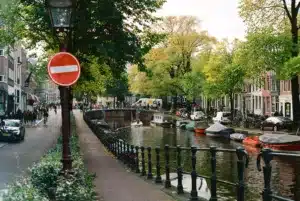
I do not think the goal should be making every part of Amsterdam cheap.
That usually produces a strange trip.
You save €8 by walking forty minutes in the rain, then spend €22 on snacks because everyone arrived hungry and annoyed.
I would rather decide in advance where money changes the experience.
Remember, location matters.
I would pay a little more to stay somewhere where the evening feels good.
That does not necessarily mean Dam Square.
Jordaan, Oud-West, Oost and De Pijp can all be better places to come home to because the neighbourhood itself becomes part of your stay. You have a café nearby. Dinner is around the corner. You can go for a walk without feeling as if you are still inside the tourist centre.
I would also spend on the museums I genuinely care about.
If Dutch art is the reason you are excited about Amsterdam, the Rijksmuseum deserves time. If Van Gogh matters to you, book the Van Gogh Museum. If you love museums, visit three. Spend according to your interests, not somebody else’s checklist.
And if I were visiting Amsterdam for the first time, I would spend some money early on understanding the city.

The Hello Amsterdam Walking Tour costs €29 for an adult and gives you two hours of history, architecture, canal stories, Dutch culture and the practical context that makes the rest of the trip easier to read. Who Is Amsterdam currently positions it specifically as its compact first-day introduction.
I think that is a better use of €29 than three separate attractions chosen because you felt guilty walking past them.
Other Paid Experiences
Other paid options can still make sense when they match the way you like to travel, but they do not all need to be part of the same trip.
For travellers who care more about food, the Self-Guided Food Tour de Jordaan starts at €12.50 for one person. Food is paid separately, with guests typically spending around €25 if they try the full set of tastings.
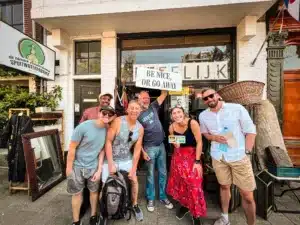
If you have a larger experience budget and want something more personal, the Humans of Amsterdam Cultural Walking Tour is €119 per adult. It runs for four hours and includes two curated encounters with local Amsterdammers, apple pie and drinks.
That is how I decide if something belongs in an Amsterdam daily budget.
Does the money give me context, access or an experience I could not recreate by wandering around?
If yes, I am interested.
If the main benefit is that the ticket bundle has a large red “SAVE 18%” badge, I need more convincing.
Where Amsterdam Quietly Wastes Your Money
Amsterdam gets expensive when you stop making decisions.
You are starving, so you choose the first restaurant with seventeen menu photographs.
You are exhausted, so you take a taxi for a journey the tram could have handled.
You forgot to book, so you pay an expensive reseller.
You are thirsty, so you buy a €4 bottle of water from the first tourist shop.
You did not think about dinner, so you settle for a mediocre expensive restaurant beside a major attraction.
That is where money quietly disappears. The goal is not to make everything cheap. It is to avoid spending stupid money because you are tired, hungry or rushed.

Our Amsterdam on a budget guide goes deeper into market food, picnics, neighbourhood choices and lower-cost activities. It also makes one point I agree with completely: the rushed version of Amsterdam is often the expensive one.
Then there are city passes.
The I Amsterdam City Card currently covers more than 70 museums and attractions, GVB public transport, a canal cruise and a 24-hour bike rental.
That can be excellent value for someone planning several included attractions.
It can also become a small plastic supervisor living in your pocket.
You paid for it.
Now the card wants another museum.
And another.
You are standing beside a canal having a perfectly nice afternoon, but somewhere in your mind a calculator is screaming that you have only extracted 63% of the possible value.
I would plan the itinerary first and buy the card second.
The Rijksmuseum is included. The Van Gogh Museum and Anne Frank House are not, and airport train travel is also outside the City Card’s GVB transport coverage.
That matters.
Another easy money leak is panic booking.
The Anne Frank House sells its own tickets online. If your chosen time is gone, do not respond by handing money to the first website using the words “Anne Frank experience.”
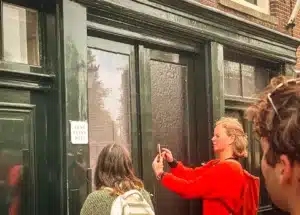
Read our guide to last-minute Anne Frank House tickets and keep checking the official museum system. The Anne Frank House itself warns that its tickets are only sold through its website.
The broader rule is simple: check the official website first, and use a third-party platform only when you genuinely need it.
Booking direct often means clearer conditions, fewer unnecessary fees, easier communication and more of the money reaching the local business.
And then there are taxis.
They have a purpose.
Airport arrival with three children, luggage and rain? Fine.
Mobility issue? Of course.
Taking a taxi because the tram map appeared complicated for eleven seconds?
Maybe give the tram another chance.
Amsterdam has enough expensive things without inventing new ones.
What I’d Budget for Three Days in Amsterdam
This is the part I would want before booking.
Not twenty hypothetical travel styles.
One normal example.
Imagine two people staying for three nights and sharing a mid-range room priced at €210 per night before tourist tax.
Here is the calculation per person, including accommodation and excluding flights:
| Expense | Per person |
| Hotel share | €315 |
| Tourist tax | about €39 |
| Food and drinks | €165–€195 |
| Transport | €21.50 |
| Museum | €25 |
| Hello Amsterdam | €29 |
| Extra activity | €20–€30 |
| Total | €614.50–€654.50 |
That puts a realistic three-night, three-day mid-range trip at roughly €615–€655 per person, including accommodation and excluding flights.
I would personally round that up to €700.
Budgeting with no space for any of that is technically efficient and emotionally suspicious. For someone asking how much money do you need for Amsterdam, my rough answer would therefore be:
A budget traveller who books accommodation carefully could aim for around €350–€500 per person for three days, including accommodation and excluding flights.
A comfortable mid-range visitor should think around €600–€800 per person for three days, including accommodation and excluding flights.
If you want a nicer central hotel, restaurant dinners and premium experiences, €900–€1,200 per person for three days, including accommodation and excluding flights, is not difficult to reach.
That is the Amsterdam trip cost I would use for planning because it gives you room to behave like a person instead of an accounting department.
And the trip itself?
I would keep it simple.
- First day: learn the centre and Jordaan.
- Second day: one major museum, De Pijp and a good dinner.
- Third day: Noord, a market or food route, then an evening without a ticket attached to it.
Three days.
Enough structure to make the money count.
Enough empty space for Amsterdam to do something you did not schedule.
So, Is Amsterdam Worth the Money?
For me, yes.
But you need to understand where the expense lives.
Amsterdam is expensive to sleep in. It does not have to be expensive to experience. A bed can be painful, the tourist tax adds a number nobody enjoys and a restaurant on the wrong street can make lunch feel surprisingly ambitious. None of that means the whole city requires constant spending.
Walk through the Jordaan after dinner. Take the ferry across the IJ. Sit beside a canal for twenty minutes. Go through the Begijnhof. Walk around NDSM. Buy something from a market and eat it outside.
The part of Amsterdam people often remember is the part between the bookings.
That is why my Amsterdam budget guide comes down to one approach:
Spend on the things that change your experience.
Do not spend because you are tired, rushed or afraid you are missing something.
The city is expensive enough without paying to hurry through it.
Paying in Amsterdam Without Wasting Money
Amsterdam is extremely card-friendly, so most visitors do not need to carry hundreds of euros. It is still sensible to keep a small amount of cash for the occasional market stall or small business, but cards are accepted widely.
If a payment terminal or ATM asks whether you want to pay in your home currency or in euros, choosing euros will usually avoid dynamic currency conversion and allow your own bank or card provider to handle the exchange. Check your bank’s foreign-transaction fees, because those still matter.
Frequently Asked Questions
Excluding accommodation and flights, around €65–€130 per person per day is a useful planning range for food, local transport, one paid attraction and some flexibility. You can spend less by walking, using markets and supermarkets, and choosing free activities.
It can be, particularly around major attractions and the busiest central streets. Casual lunches, market food, tokos and supermarket picnics make it much easier to eat well without paying restaurant prices three times a day.
Yes, although accommodation is the main challenge. Book the hotel carefully, compare dates, use Amsterdam’s compact layout, eat at markets or tokos, take the free ferry and build the trip around neighbourhoods, canals and parks rather than a nonstop list of paid attractions.
Accommodation is often most expensive during tulip season, especially April, as well as around King’s Day, Pride, Amsterdam Dance Event, major conferences, concerts and busy summer periods. The exact pattern changes each year, so compare hotel prices before booking flights.
If the event is why you are coming, accept the premium and book early. Otherwise, changing your dates by a week can sometimes save a meaningful amount.
The quieter winter months are often cheaper than spring and summer, although weekends, holidays and major events can still raise prices. Rather than relying on one supposedly cheapest month, compare a few sets of dates and check the events calendar before booking.
For a comfortable mid-range visit, around €600–€800 per person for three days is a sensible planning range, including accommodation and excluding flights. A careful budget trip may come in around €350–€500, while a nicer hotel, restaurant dinners and premium experiences can take the total to €900–€1,200 per person.