
Those bands of red, yellow and pink look designed for the camera. In reality, they are what efficient bulb farming looks like in bloom.
Written by Alexandra, Founder of Who Is Amsterdam
Every spring I get the same reaction from visitors when we drive into the Dutch countryside: “Wait. Are they REALLY that straight?”
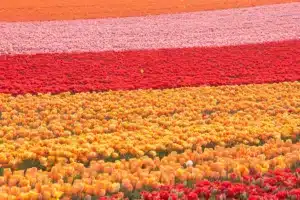
Yes. They really are. Enormous red, yellow, pink and purple bands run across the landscape so neatly that they can look almost Photoshopped.
And if you know the Dutch a little, you might assume we somehow organised the flowers for maximum efficiency and Instagram potential. The funny thing is: we kind of have. Just not for Instagram.
These are working farms. The straight rows help growers separate bulb varieties, move machinery through the crop, inspect plants and harvest efficiently.
In many of the fields visitors photograph, the flower is not even the main crop. The valuable part is the bulb growing underneath it.
That is what makes the fields so interesting to me: almost everything you are looking at has a practical purpose.
It is a very Dutch story: practicality accidentally creating beauty. The farmer is thinking about crop identity, drainage, machinery and yield. Visitors arrive and think: “Oh my God, it’s beautiful.” Both are right.
1. These Are Farms, Not Flower Displays
The first thing to know is that most of the spectacular fields around Lisse, Hillegom and the wider Bulb Region are commercial farmland, not outdoor flower exhibitions.
Keukenhof is designed for visitors. These fields are designed for farming. That difference explains almost everything that follows.
Most visitors naturally assume the crop is the flower. In many outdoor tulip fields, however, the farmer is primarily growing bulbs.
In the Duin- en Bollenstreek between Haarlem and Leiden, growers have cultivated flower bulbs at scale for generations, and the landscape has been shaped around that work.
Tulip bulbs do not like sitting in wet soil. The sandy soil behind the coastal dunes drains very well, which is one of the reasons this region became so suitable for bulb growing.
Bulbs are planted in autumn, grow through winter and spring, and are lifted again after the plants have completed the part of the cycle the grower needs. You can read more about that agricultural cycle in the official Bulb Region overview.
So when you stop beside a spectacular field, remember: you are looking at a beautiful moment in a much longer agricultural cycle, not a display planted for visitors.
How Commercial Bulb Farming Creates the Pattern
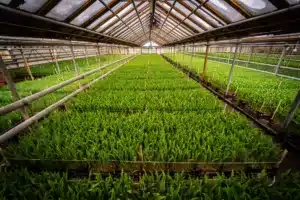
Commercial bulb farming is organised around lots: groups of bulbs that need to stay identifiable as they are planted, inspected, lifted, stored and sold.
The Dutch Flower Bulb Inspection Service, BKD, requires growers to register plots and bulb lots and carries out field inspections for things such as varietal authenticity, viruses and other crop problems. BKD explains its field inspections here.
That need for separation is one of the main reasons the landscape looks so organised.
A grower needs each cultivar to remain clearly identifiable. Put one cultivar beside another and, once they bloom, the agricultural boundary becomes a colour boundary.
Repeat that across a long, flat field and the farm suddenly looks as if somebody used a ruler and a very large box of crayons. Beautiful, yes. But still agriculture first.
2. The Flower Is Often Not the Crop
This is the detail that surprises visitors most, and it changes how you see the fields immediately.
Many of the spectacular outdoor tulip fields tourists photograph are being grown primarily for bulbs, not for cut flowers. The Dutch flower industry produces both, but they are different production systems.
In a bulb field, the spectacular bloom is a stage in the production process rather than the final product. After flowering, growers often remove the heads in a process known as topping, or koppen in Dutch.
One week you can drive past a sea of tulips. Come back shortly afterwards and think: “Where did they all go?” Nothing went wrong, and nobody stole 700,000 flowers overnight. The farmer may simply have removed the heads.
The plant has a different priority: putting energy back into the bulb below ground.
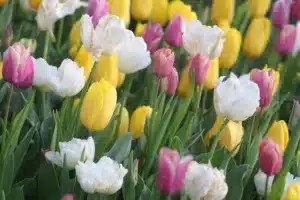
Producing a flower and moving towards seed formation uses energy that the grower would rather direct towards bulb development.
Research from Wageningen’s former Flower Bulb Research Laboratory explains that removing tulip flowers early helps reduce that loss of energy to flowering and seed formation.
The complication is that growers and inspectors may first need to see the plants in bloom to check varietal authenticity and visible signs of disease. Wageningen’s research on tulip topping machines describes exactly that short window between inspection and removing the flower heads.
So there is a slightly strange moment every spring when the thing visitors travelled to see becomes the thing the farmer needs to remove.
Afterwards, the leaves remain for a while and continue supporting the bulb below ground. Later, the bulbs are lifted, cleaned, sorted, dried and prepared for storage, replanting or sale.
That is why I never see a tulip field as just a pretty stripe anymore.
The flower is the visible part of a much longer agricultural year: autumn planting, winter weather, crop inspection, flowering, topping, bulb growth, lifting, sorting and storage.
The perfect spring stripe is only one frame in that story.
The farm keeps going long after everybody with a camera has gone home.
3. Why the Rows Are So Straight
Why are the rows so straight? Because commercial farming works better when everything is predictable.
Bulb production is heavily mechanised, so growers need regular beds and spacing that planting, crop-care and harvesting machinery can follow.
Straight beds also make it easier to inspect plants, remove off-types or diseased plants and work through the crop without driving unpredictably across it.
Wageningen University & Research has long studied tulips as row crops, including mechanical planting and harvesting systems, and its research on plant density shows that spacing is directly connected to bulb yield. Wageningen’s work on tulip planting density gives a sense of how technical that decision becomes.
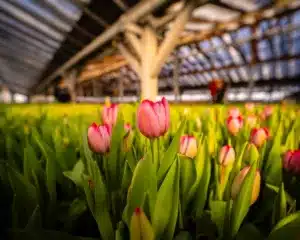
The exact technology varies by grower and soil type, but the principle stays the same: order in the field saves labour and protects the crop.
Then the Dutch landscape does the rest.
Tulips are relatively small plants, but Dutch agricultural parcels can be long and remarkably flat.
When dozens of parallel rows run towards a low horizon, perspective compresses them into one enormous clean stripe. From a drone, individual flowers almost disappear and the field becomes pure geometry and colour.
That is why a working tulip field can look more deliberately designed from the air than some actual gardens.
The order is real.
Its purpose is simply farming rather than aesthetics.
4. Why One Stripe Is Red and the Next Is Yellow
The colour changes are what make the fields look deliberately designed.
In practice, a change from red to yellow or pink usually means you are looking at a different cultivar or bulb lot.
The grower keeps those varieties separate for practical and commercial reasons. When they flower in different colours, the production plan suddenly becomes visible from a kilometre away.
Keeping varieties identifiable matters commercially and for inspection.
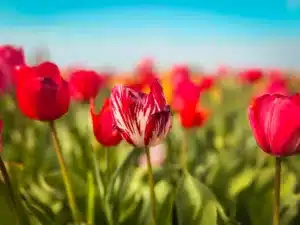
Flower bulbs are sold as specific cultivars, not as a lucky dip, and Dutch bulb inspections include checks for species or varietal authenticity. Growers and inspectors need to be able to recognise plants that do not belong in a lot, as well as signs of disease.
BKD field inspectors may visit bulb plots several times during a season depending on the crop and classification requirements.
So the clean transition from red to yellow is not colour blocking for tourists. It is the visible boundary between crops being managed separately.
The colours do not always cooperate with the visitor calendar. Different cultivars flower at slightly different times, and weather changes the pace.
One strip can be at full colour while the neighbouring one is still green, and a field that looked spectacular a few days ago may already have moved into the next stage of production.
That is why photos taken from almost the same Bollenstreek road can look completely different from one week to the next.
It is also why I would never promise a guest one exact field months in advance.
Nature has not joined the tourism department.
If tulips are part of a larger spring trip, our Ultimate Amsterdam Travel Guide gives the broader seasonal picture, including when the flower season fits into Amsterdam, King’s Day and the rest of a spring itinerary.
5. Why the Dutch Landscape Makes the Stripes Look So Spectacular
The farming system creates the stripes, but the Dutch landscape is what makes them look so spectacular.
This is also where the flower fields connect to a much bigger Dutch story.
The traditional Bollenstreek sits behind the coastal dunes between roughly Leiden and Haarlem.
The simple version is this: bulbs dislike sitting in wet ground, and the sandy soils behind the dunes drain very well. That helped make this region particularly suitable for bulb growing.
Historically, dune excavation and land management created light, well-drained soils that supported the growth of the bulb industry here.
Then add the wider Dutch relationship with land and water.
For centuries, the Netherlands has actively organised its landscape through dikes, polders, canals, drainage, water levels, roads and agricultural parcels. We have relatively little space, and much of it has to work very hard.
The flower fields fit perfectly into that story: agriculture, drainage, engineering and efficient land use all sitting underneath something visitors experience as pure beauty.
The famous flower fields near Amsterdam are mostly not in Amsterdam at all. The best-known stretch is the Bollenstreek around places such as Lisse, Hillegom, Noordwijkerhout and Voorhout.
Keukenhof and the commercial fields are also completely different experiences. Keukenhof is a designed visitor garden that wants you to walk among the flowers. A bulb farmer absolutely does not. Both can be beautiful, but only one is a public garden.
If you are here during tulip season, I would treat the fields as a countryside experience rather than an Amsterdam attraction to squeeze between a museum and dinner.
Do not just hunt for “the Instagram field”. The interesting part is the whole landscape: farms, villages, drainage systems, open space, bulb production and the way Dutch people have learned to organise land and water.
That is also the thinking behind our Private Amsterdam Tulip & Windmill Tour by Car.
We visit the Tulip Experience and the surrounding growing region, then continue into the Dutch countryside rather than treating one photogenic field as the whole story.
The stripes are beautiful.
Understanding what created them makes them even better.
6. How to See the Fields Without Damaging Them
There is one unfortunate side effect of making working farmland look this good: people walk into it for photographs.
An open field can feel public, especially when there is no fence, but this is somebody’s livelihood.
Commercial fields are private working farms. Walking between the rows can damage stems or bulbs, and shoes can also carry plant diseases or pests from one field to another.
The official Duin- en Bollenstreek visitor organisation specifically asks people to stay outside the growing fields for both reasons. Its spring flower guide and live Flower Map are much better ways to work out where the colour is without treating a farmer’s crop like a public photo studio.
No fence does not mean permission.
This is one of those Dutch situations where the landscape looks completely open while the answer is still no.
Take photographs from public roads and paths. If you want the iconic photograph where you are actually standing among tulips, choose somewhere designed to let visitors do exactly that.
Places such as the Tulip Experience have dedicated show gardens for visitors, so you can get the colourful photograph without stepping through a commercial crop.
For photographs back in the city, our Best Photo Spots in Amsterdam guide covers canal views, bridges and seasonal light without requiring anybody to negotiate with agricultural property.
Once you know what you are looking at, the stripes start telling a much bigger Dutch story.
They show where one crop lot ends and another begins, how machinery moves through a field and how cultivars are managed separately.
They also show something the Netherlands has been doing for centuries: organising land, water and limited space so that it works efficiently.
The remarkable thing is not that Dutch farmers somehow plant flowers perfectly for photographs.
It is that a practical agricultural system becomes this beautiful for a few weeks every spring. Very Dutch, really: practicality accidentally creating beauty.
Frequently Asked Questions
No. Tulips are the most famous, but the bulb-growing region also produces crocuses, daffodils, hyacinths and other flowers. The spring landscape changes as different crops come into bloom, which is why the colours and even the scent of the region can change across the season.
The Duin- en Bollenstreek generally sees crocuses first, followed by daffodils and hyacinths, with tulips becoming the major attraction later in spring.
No. The large commercial tulip fields near Amsterdam are outside the city. The best-known area for visitors is the Bollenstreek around Lisse, roughly between Leiden and Haarlem. It is close enough for a day trip from Amsterdam, which is why the fields are often marketed as “Amsterdam tulips,” but you will need to leave the city to see the agricultural landscape properly.
No. Keukenhof is a designed spring garden created for visitors, with elaborate displays made from millions of bulbs. Commercial fields are working agricultural land, often used for bulb production. Keukenhof wants you to walk among the flowers; a commercial grower does not. Both are beautiful, but they serve completely different purposes.
Weather changes the exact timing every year, but the broad sequence usually begins with crocuses and daffodils, followed by hyacinths and then tulips. In the Bollenstreek, tulips are generally the main attraction in April into early May.
If the fields are a major reason for your trip, check a current regional Flower Map or bloom update shortly before visiting rather than relying on photographs from the same calendar date last year.