
A local’s guide to getting around Amsterdam like you live here.
Written by Alexandra, Founder of Who Is Amsterdam
Nobody plans to fall in love with Amsterdam light. It just happens.
Around eight in the morning, a canal bridge and canal walks become a quiet little stage. Coffee cools in your hand as the water mirrors the narrow houses, bare branches, and a lone cyclist gliding by.
The photo almost takes itself. Somewhere in the back of your mind, you realize Amsterdam has been doing this to people for four hundred years.
Amsterdam is photogenic because of its scale, its light, and the way the city refuses to be grand. The landmarks help, but they aren’t the whole story. Everything is narrow. Everything leans slightly. The streets are small enough that something beautiful is always close.
This guide covers the best photo spots in Amsterdam, the classics to quieter neighbourhoods and a few places most visitors miss. It also covers the best time to visit each one, because in Amsterdam, timing matters almost as much as location.
Classic Amsterdam Photo Spots
These are the places that earned their reputation. They appear on every list because they genuinely photograph well, and no amount of overexposure changes that. What changes is how you approach them.
Damrak
Damrak is the first thing most visitors see when they arrive at Centraal Station and start walking into the city. It is wide, slightly chaotic, and lined with the colourful canal houses that have probably appeared on more screensavers than any other street in the Netherlands.
The photo everyone takes is the row of house facades reflected in the water, usually with a canal boat drifting through the frame. It is a good photo, and it has been taken approximately eleven million times.
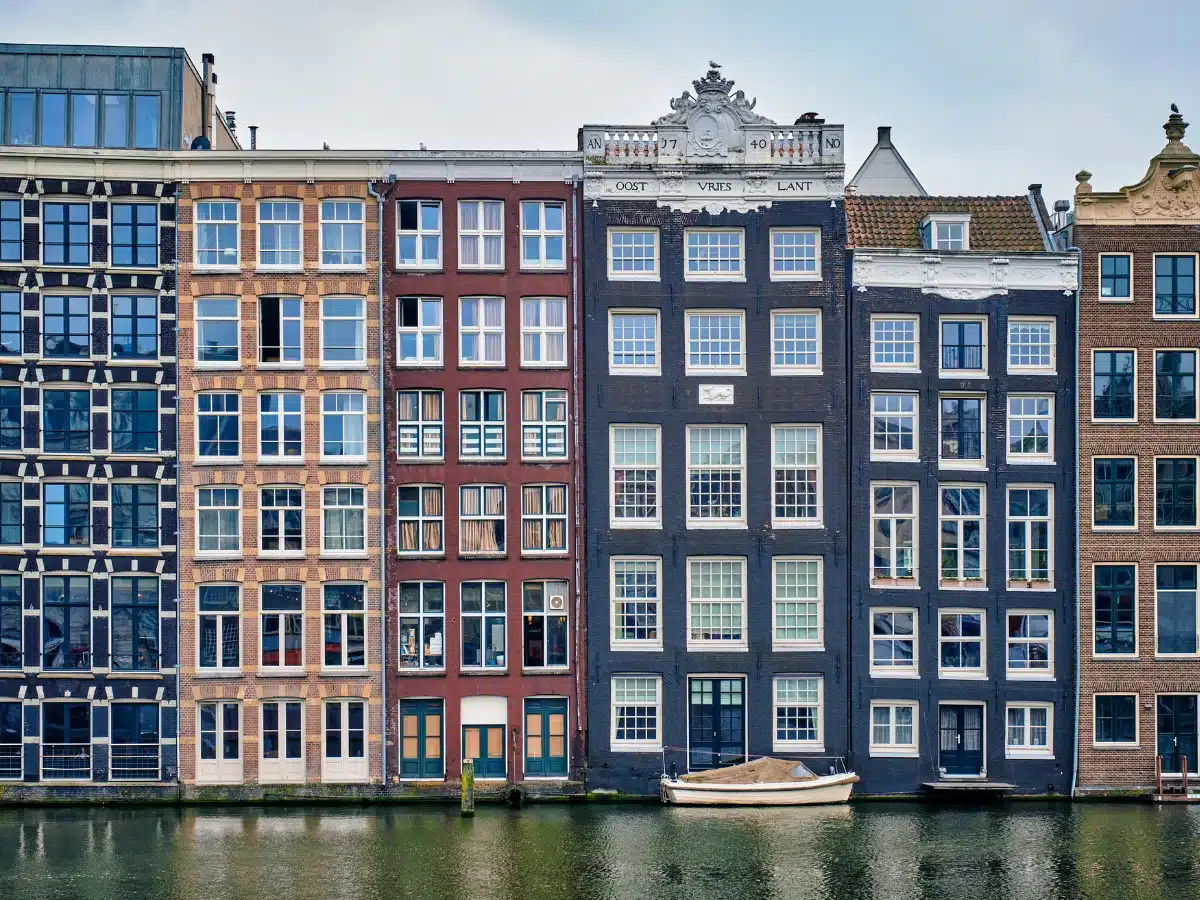
The better version is early morning, before seven if you can manage it, when the tour boats have not started running and the water is still enough to give you a clean reflection. Overcast days work better than full sun here. The soft diffused light brings out the colours without washing out the sky.
- When to go: Early morning, any season. Autumn gives you warm tones in the water. Winter gives you mist.
- Photography tip: Stand at the southern end and shoot north toward the station to include both the facades and the movement of the water. Get low if you want to emphasise the reflection.
- Local insight: Most people photograph Damrak from street level. Walk down to the water’s edge near Prins Hendrikkade and you’ll find a completely different angle that almost nobody uses.
The Seven Bridges (Reguliersgracht)
The Seven Bridges viewpoint is, technically, one of the most photographed spots in Amsterdam. Stand in the right place on Reguliersgracht and you can see seven arched bridges receding into the distance, each one slightly smaller than the last, all of them perfectly aligned.
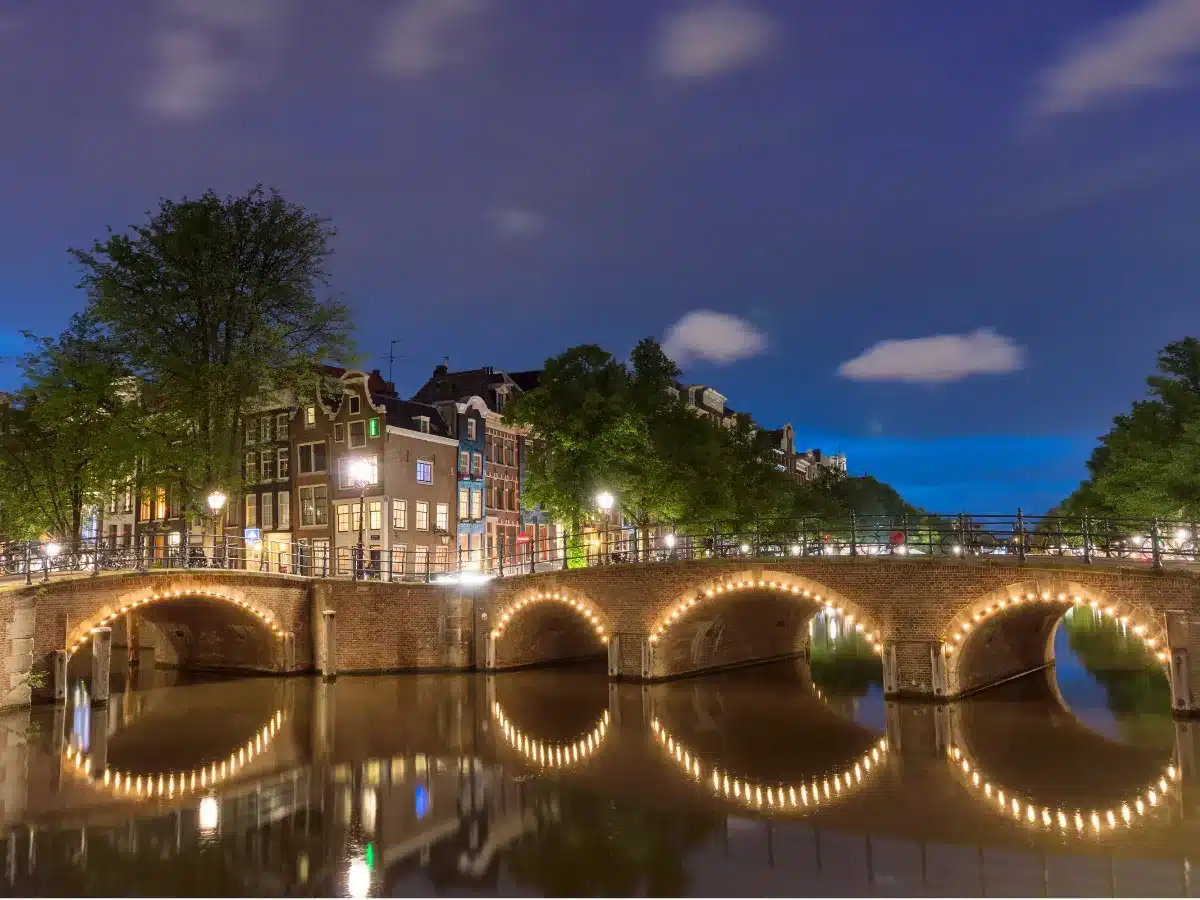
It’s the kind of composition that happens maybe once in a city’s entire history of urban planning, and Amsterdam managed it without trying. The canals were laid out for water management, not photography. The result is extraordinary anyway.
- When to go: Blue hour, that twenty-minute window after sunset when the sky turns deep blue and the bridge lights come on. The mix of warm artificial light and cool sky creates the famous shot. In summer, blue hour falls around 10pm. In winter, it is closer to five.
- Photography tip: Stand on the Keizersgracht and Reguliersgracht corner to see all seven bridges. Use a tripod if you have one. The light is low, and a longer exposure will smooth out the water.
- Local insight: This spot is busiest on weekend evenings in summer. On weekday evenings in spring or autumn, you will often have enough quiet time to set up properly.
Magere Brug (The Skinny Bridge)
The Magere Brug is a white wooden drawbridge over the Amstel, and it has stood there in some form since the seventeenth century. At night, hundreds of small bulbs light it up and reflect in the river below. During the day, it remains a beautiful old bridge that people still use to cross the water.
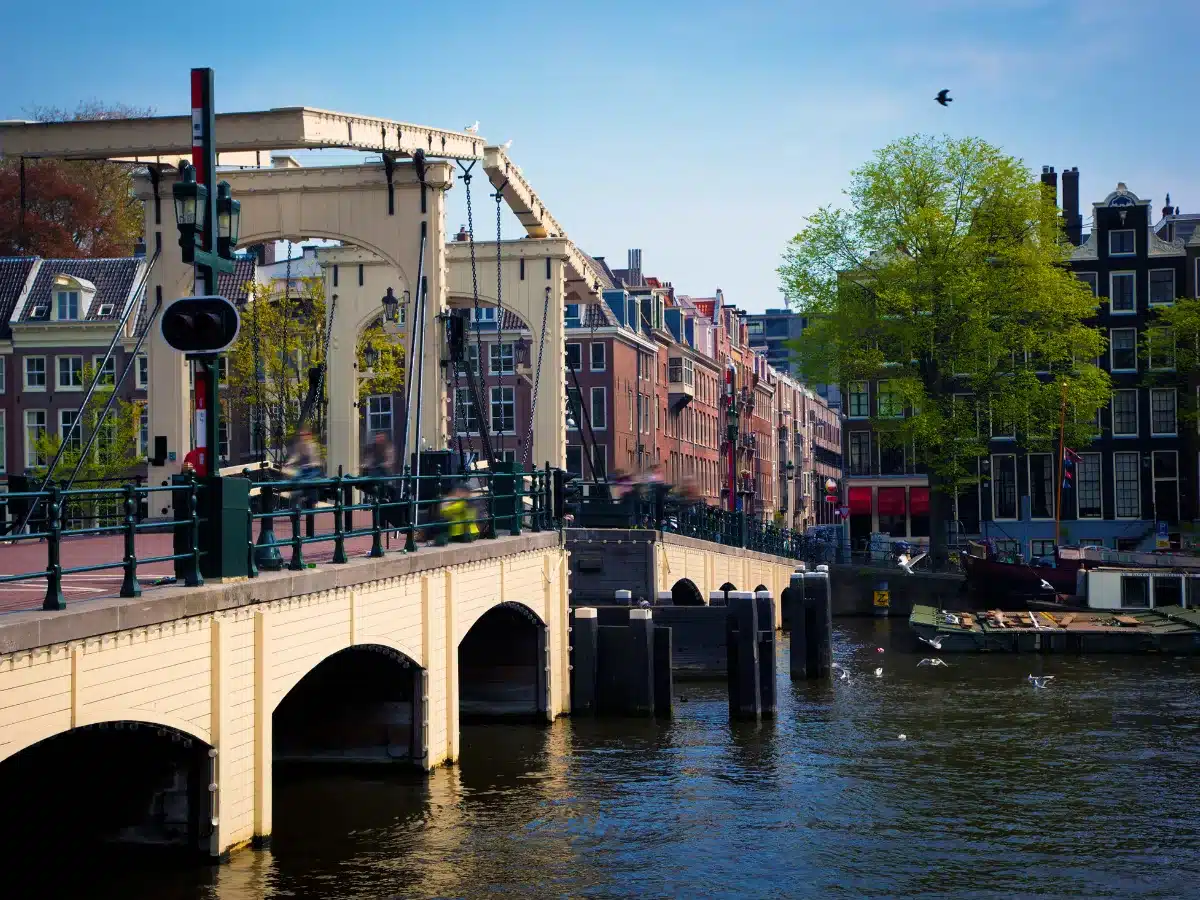
This is one of the few Amsterdam photo spots where the night version feels more interesting than the day version. The lights turn it from a pretty bridge into something close to a film set.
- When to go: After dark, year-round. Aim for a calm night when the Amstel is not too choppy. The reflection doubles the lights and makes the whole scene more dramatic.
- Photography tip: Shoot from the riverbank rather than the bridge itself. The best angle is from the east bank, slightly south, which gives you the full span of the bridge with the reflection underneath.
- Local insight: The bridge is a drawbridge and opens periodically for tall boats. If you are there when it opens, wait. The raised bridge with the lights is a genuinely unusual shot that most visitors do not have.
Neighbourhoods Worth Photographing
The best Amsterdam photography spots are not always specific locations. Sometimes they are just streets where everything works at once, the light, the scale, and the ordinary life happening in the frame. These three neighbourhoods reward slow walking and no particular plan.
Jordaan
Jordaan is the neighbourhood Amsterdam puts forward when it wants to show visitors what it really looks like, and with good reason. The canals here are narrower than the main ring canals. The streets are quieter. The houseboats have cats sitting on the roof.
Walk the Bloemgracht and the Egelantiersgracht in the morning before the cafés fully open. Both are narrower than the main canals and, honestly, some of the prettiest in Amsterdam. The light comes in low and sideways through the gaps between the houses. Bicycles are parked in configurations that look almost like abstract sculpture. Locals open windows that have been opened the same way for a hundred years.
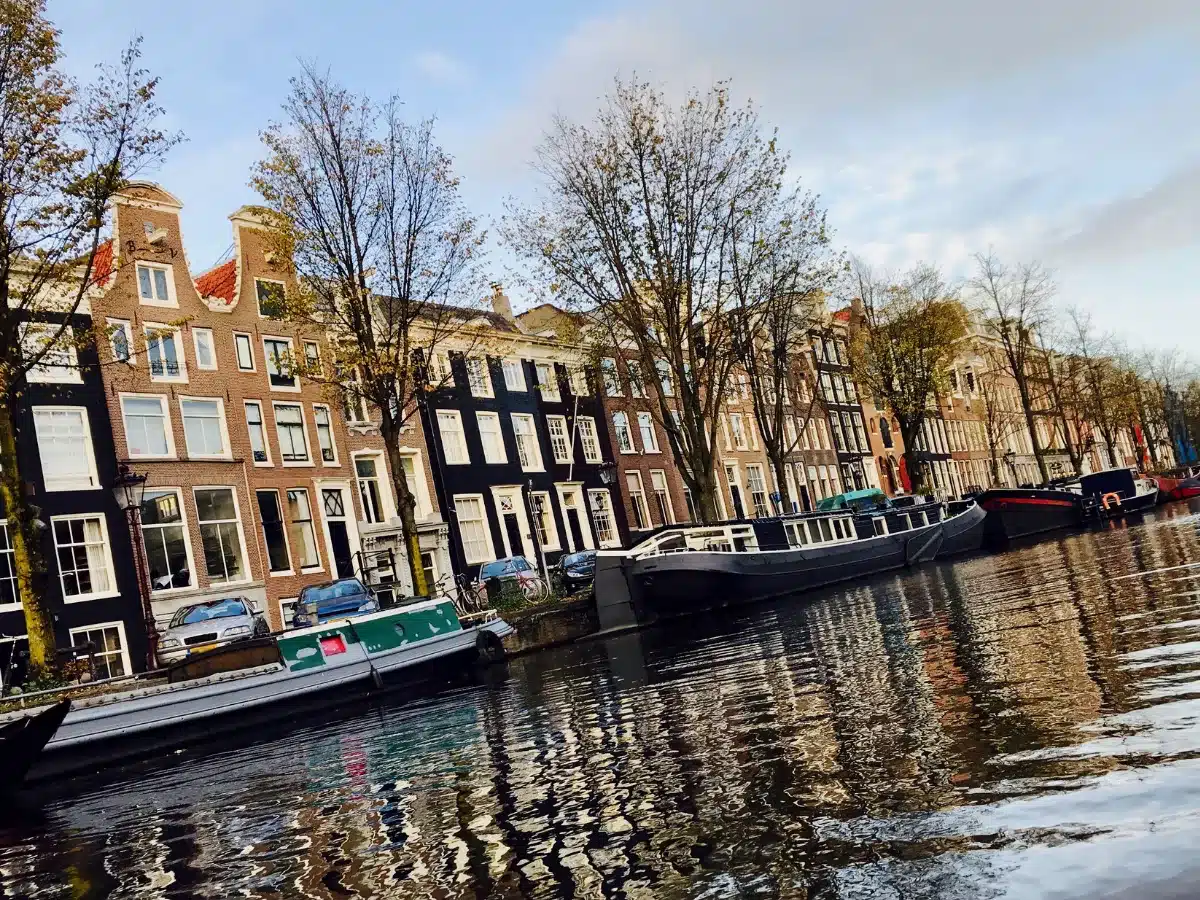
What makes Jordaan photogenic is not one single thing. It is the density of detail. Every ten metres, something is worth noticing, a doorstep arrangement of plants, a canal boat covered in solar panels, or a cat that has clearly been sitting on that particular step since approximately 1987 and has no intention of moving.
If you want a guided introduction to why Jordaan looks the way it does, the Hello Amsterdam Walking Tour covers the neighbourhood’s history in a way that changes how you see it.
De Pijp
De Pijp is a different kind of photogenic. Where Jordaan feels historic and quiet, De Pijp feels alive, busy, and slightly chaotic in the best possible way. It is one of Amsterdam’s most densely populated neighbourhoods, and that energy shows.
The Albert Cuyp Market runs through the neighbourhood six days a week and works beautifully for street photography. Colour, movement, and faces from a place where many nationalities genuinely live side by side. Do not try to frame it too neatly. Let it be messy.
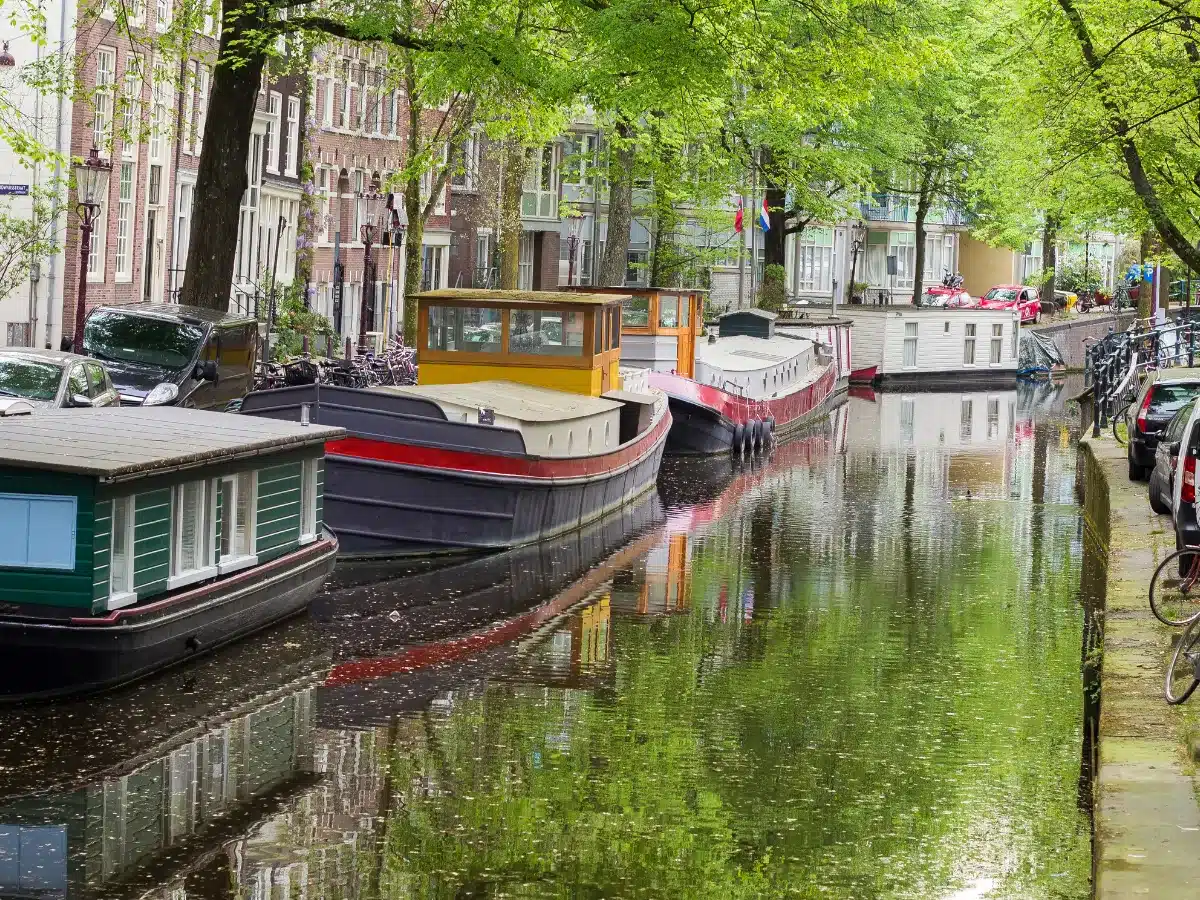
In the late afternoon, the streets around Ferdinand Bolstraat take on a warmer mood, with long shadows and the feeling of daily life unfolding naturally rather than performing for visitors.
The Self-Guided Food Tour of De Pijp is a good way to move through it slowly enough to actually notice things.
Plantage
Plantage is the neighbourhood that often gets left out of photography guides, though it deserves a place in them. It is green, quiet, and late afternoon light does something special here. It turns golden in a way that makes the brick houses look almost lit from inside.
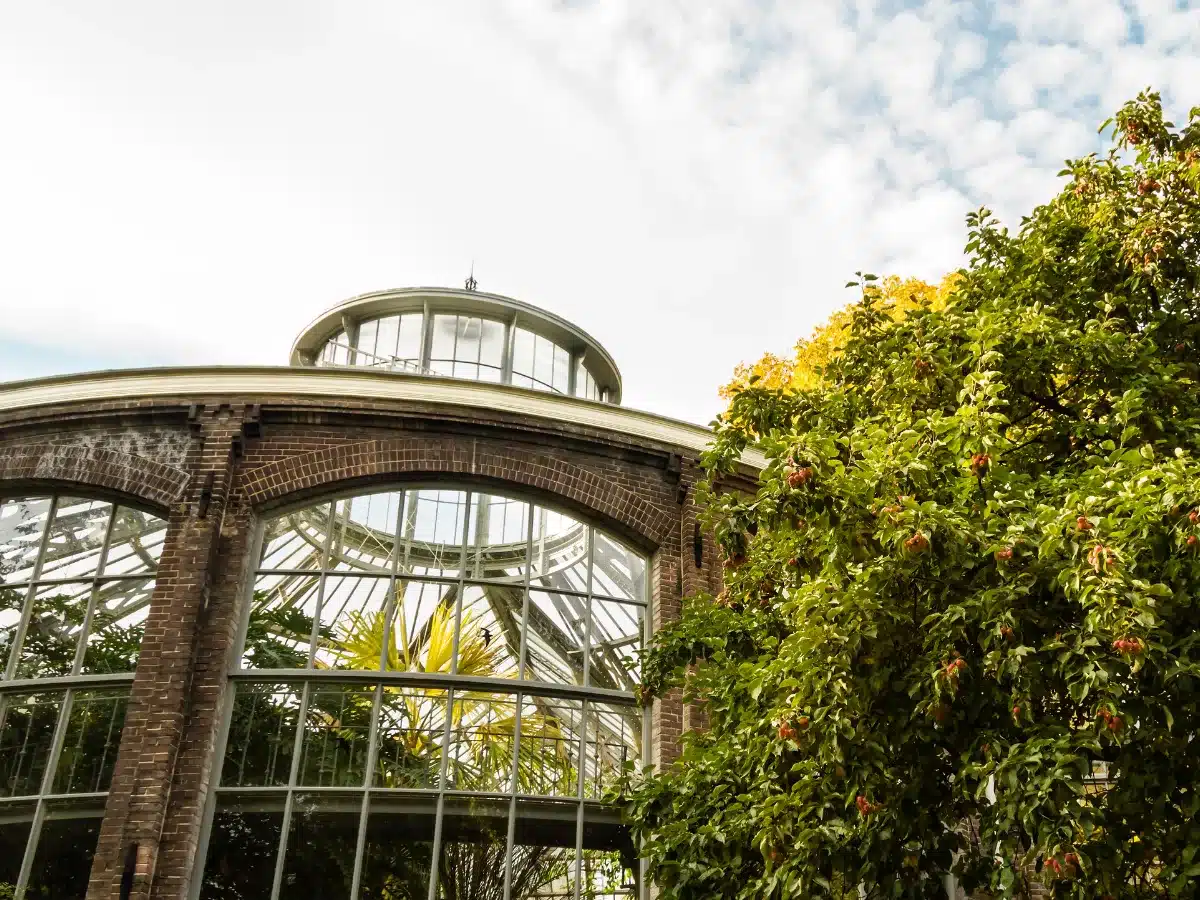
Wide streets. Mature trees. There is a sense of Amsterdam existing for the people who live in it, rather than for the people visiting it, which can be hard to find in the centre.
The Hortus Botanicus is here too, a botanical garden that has been running since 1638, useful when you want greenery with some architecture in the background.
Photo Spots Locals Actually Know About
These are the places that appear less often in mainstream travel content, either because they take a bit more effort to reach, because they are not immediately obvious, or because locals quietly prefer to keep them that way. They are worth finding.
Brouwersgracht
Brouwersgracht, the Brewers’ Canal, sits at the northern end of the Jordaan where the main ring canals meet. It is often described as the most beautiful canal in Amsterdam, and locals mostly agree. If they could only keep one, this might be it.
It’s not just another pretty canal, either. This is actually where the famous canal belt begins, the point where the Herengracht, Keizersgracht, and Prinsengracht all meet, which is what creates some of the most iconic canal views in the city.
Worth the short walk over: the recently renovated stretch of the Herengracht just off Brouwersgracht. The restored bridges and façades are gorgeous, and it photographs like it was cleaned up specifically for you.
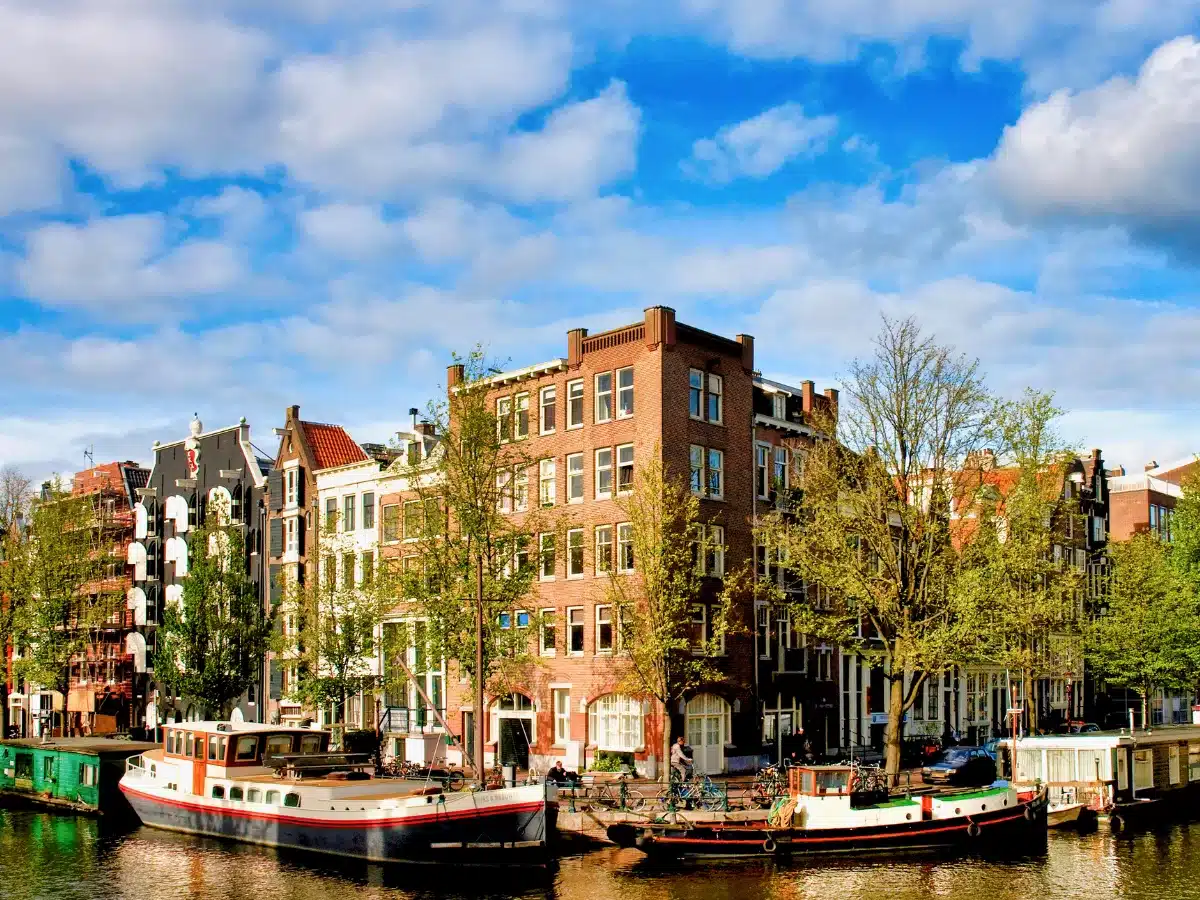
The mix of details is unusual. The canal is wide enough for good light, lined with old warehouses, and edged with houseboats that feel somewhere between gardens and floating living rooms. It is quieter than the main canal ring, with a character that feels more industrial in its bones and more lived-in in the present.
Early mornings are exceptional here. Come before eight and you will often have the canal almost to yourself.
One more stop while you’re here: Café Papeneiland, on the corner of Brouwersgracht and Prinsengracht. It’s one of the most photographed buildings in the city thanks to its beautiful double stepped gables. Even if you don’t go inside, it’s an iconic photo stop in its own right.
Begijnhof
The Begijnhof is a medieval courtyard in the middle of the city that many visitors walk past without realising it exists. A small wooden door off the Spui is easy to miss, but step through it and the city noise fades away. Suddenly, you are in a fifteenth-century courtyard with a carefully maintained garden and houses that have been continuously occupied since 1346.
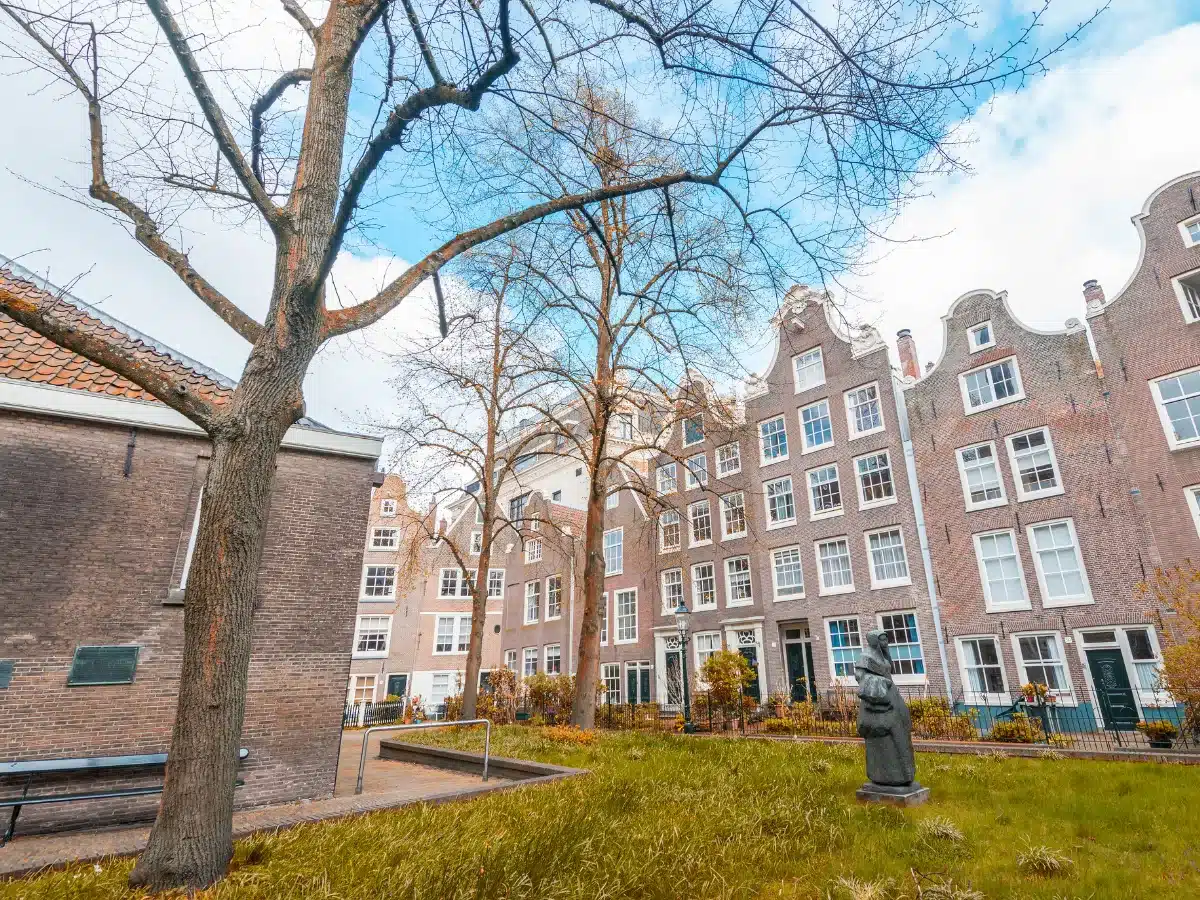
Photography here requires some restraint. It is still a residential community, and residents ask visitors to respect that. Avoid photographing people through windows, and leave the drone behind. In many ways, the best part of the Begijnhof is simply standing there quietly and taking it in.
If you do bring out the camera, arrive early in the morning before other visitors. Spring is especially beautiful, when soft light spills over the chapel and into the garden.
NDSM Wharf
NDSM is a former shipyard in Amsterdam Noord that now works as a creative hub the size of a small village. There is building-scale street art, old dry-dock cranes rusting against the sky, converted warehouses, and a view back across the IJ that most postcards miss.
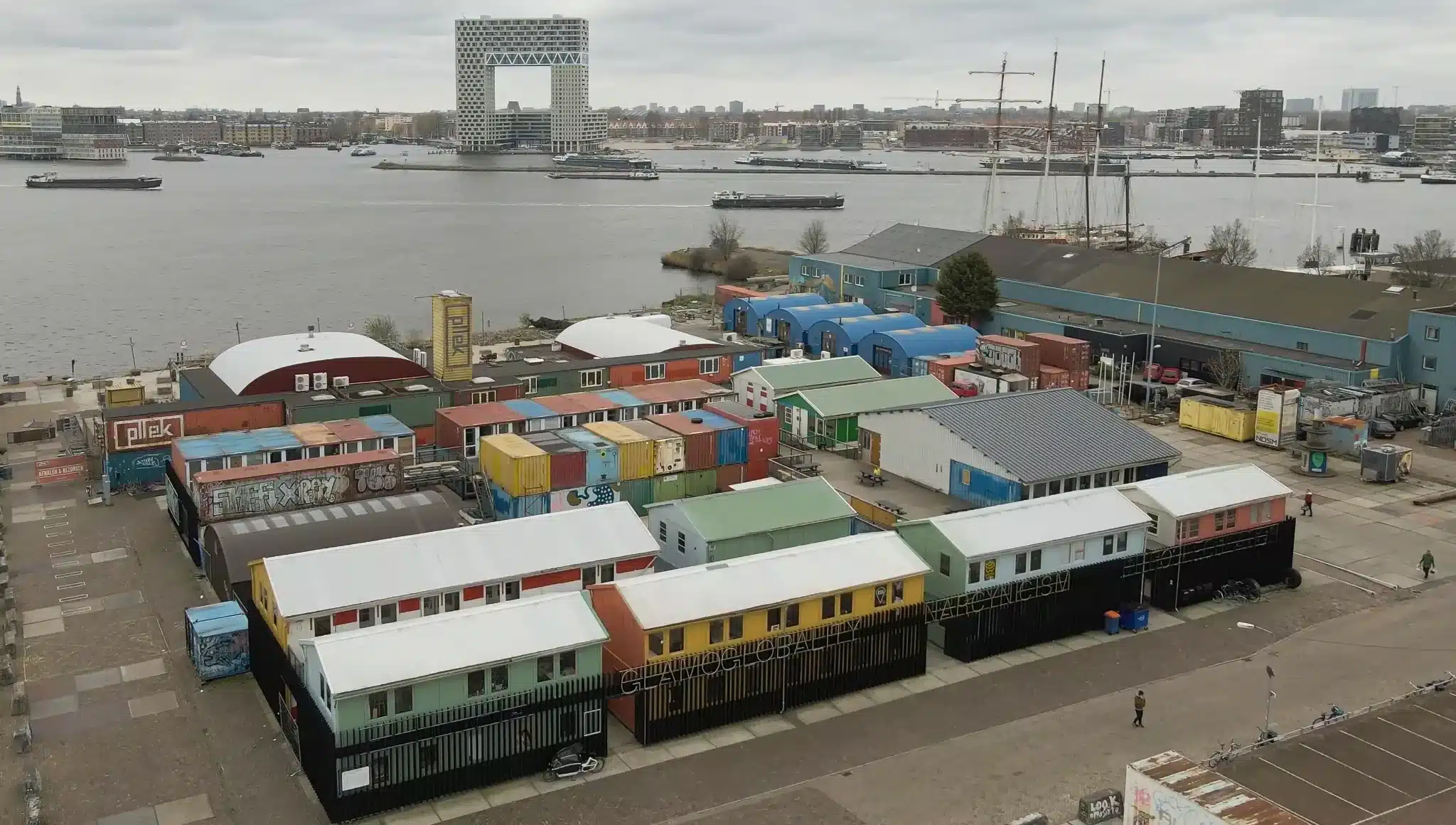
Image Url: I Am Amsterdam
That view of Amsterdam’s skyline from the Noord bank is one of the best in the city, though many visitors never see it. From here, you can take in the roof of Centraal Station, the towers, and the whole low horizontal spread of the city sitting against the water.
Café de Jaren
This is one of my favourite photography spots, and most visitors walk right past it. From the terrace at Café de Jaren, you get a beautiful view over the Amstel River with the so-called Dancing Houses in the background, a viewpoint that somehow doesn’t make it onto most lists.
Amsterdam Central Station Waterfront
Since the station renovation, there’s a large waterfront platform behind Centraal Station where locals go to sit, relax, and watch the ferries come and go. From there you get a fantastic view of the A’DAM Tower and the EYE Film Museum across the IJ. Around sunset especially, it’s a beautiful place for photos, and it’s a five-minute walk from the platform most visitors never leave.
Photography Tips from Amsterdam Locals
Light
Amsterdam has a genuinely different kind of light from many European cities because of its latitude. The city sits far enough north that the sun never gets very high in the sky, which means golden hour stretches longer than usual, especially in autumn and winter. Even midday in January can have the angled light photographers chase.
The best seasons for photography are autumn and late spring. Autumn brings warm tones and mist. Late spring brings tulips, window boxes, and long evenings where the light stays soft until nearly eleven.
If you take nothing else from this guide: early mornings and golden hour really are the best times to photograph Amsterdam. It’s not a cliché that photographers repeat out of habit. The softer light genuinely makes the canals and brick buildings come alive in a way harsh midday sun never does.
Blue Hour and Rain
Blue hour in Amsterdam is exceptional. The canals become mirrors, the bridge lights reflect in multiples, and the sky turns deep blue, making the warm artificial light feel even warmer. In summer, this happens around ten in the evening. In winter, around five. Both are worth planning around.
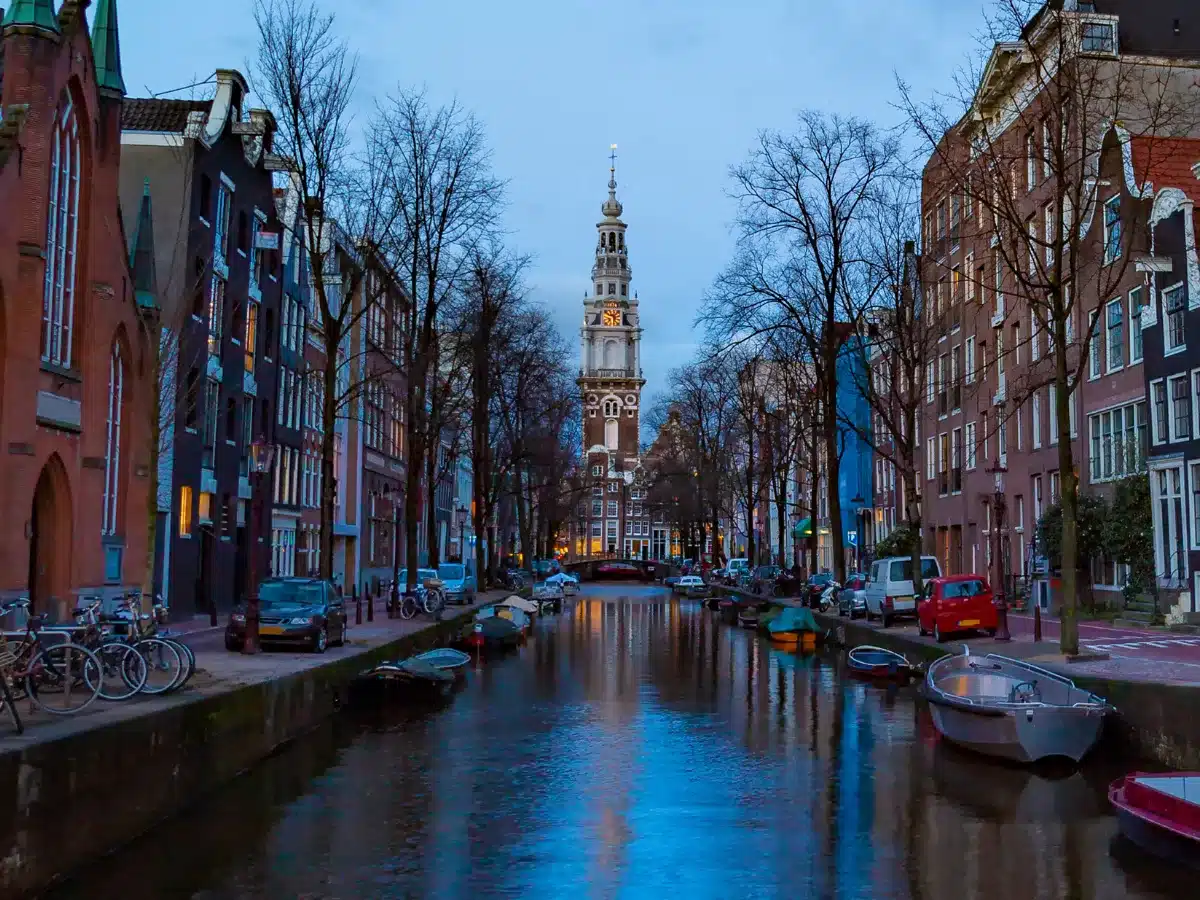
Rain is also worth pursuing. The cobblestones become reflective, the canals darken, and every light source doubles on the wet pavement. Amsterdammers cycle through rain without changing pace or expression, which becomes its own kind of photography subject.
Crowds and Timing
The centre of Amsterdam, including Damrak, Leidseplein, and the main canal ring, gets crowded between ten in the morning and seven in the evening from April through October.
For empty shots of iconic locations, go early in the morning before eight, or late in the evening after nine in summer. For less central spots such as NDSM, Brouwersgracht, Plantage, and the Begijnhof, crowds are rarely the main issue. These places reward almost any time of day.
Cyclists
A practical note: Amsterdam cyclists are confident, fast, and unlikely to slow down for photographers standing in the bike lane. They may not say anything. They may simply cycle straight toward you. Watch for the bike lanes, often painted red, and step out of them before stopping to check your phone.
It’s an easy mistake to make. You see a beautiful view and want the photo right now, but the street you’re standing on probably isn’t a pedestrian path, it’s a bike lane. Wait for a quiet moment before stepping into position rather than freezing where you are. Everyone wins that way: you get the shot, and the person on the bike doesn’t have to swerve for it.
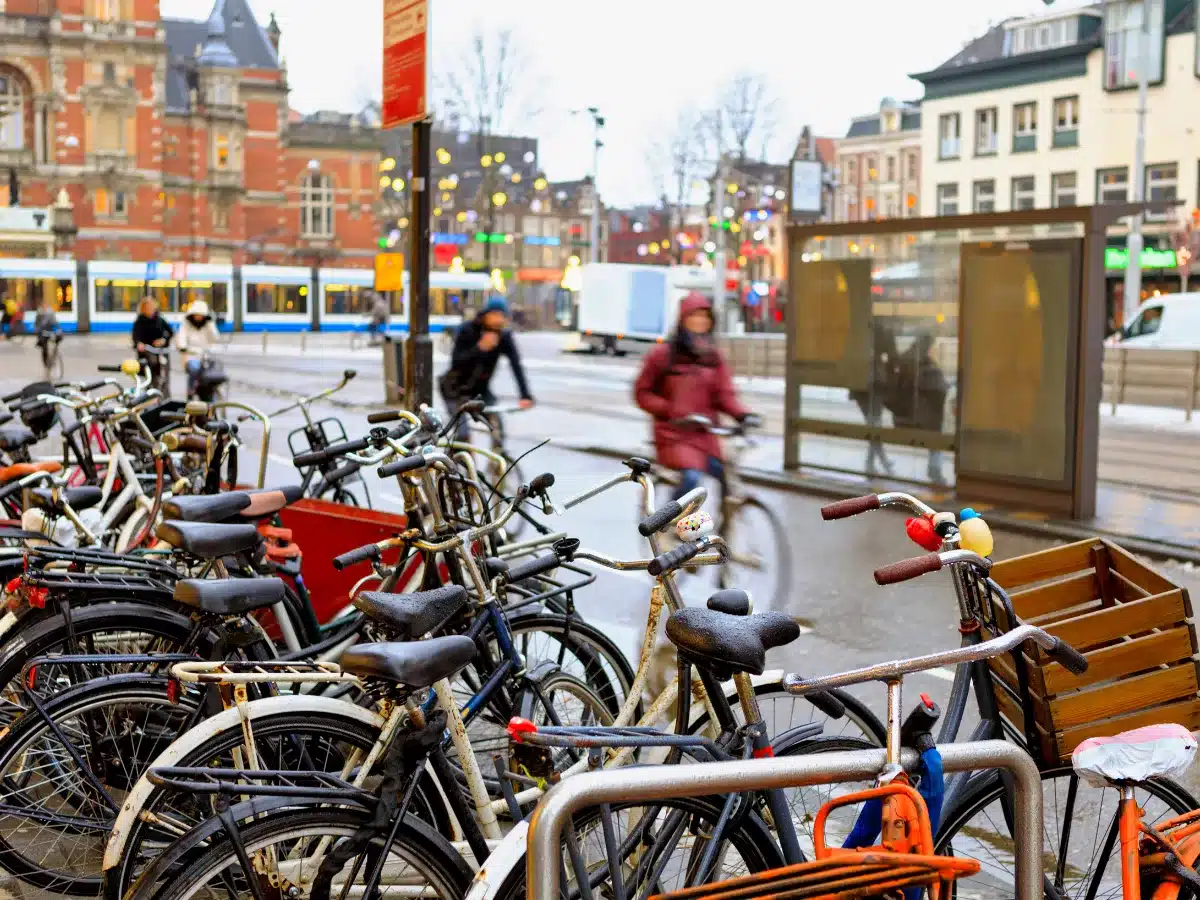
Cyclists also make excellent subjects. Morning commuters along Prinsengracht, each one slightly different but moving with the same practised ease, create a genuinely Amsterdam image, sometimes even more than the canal shots.
Seasonal Photography
Spring brings tulips to window boxes and flower markets, while the whole city seems to spend April outdoors recovering from winter. Summer is beautiful but crowded. Autumn may be the best season, cooler, quieter, and full of the kind of light Dutch painters worked with for centuries. Winter brings mist, Christmas food markets, and the occasional frozen canal, a shot most visitors never think to wait for.
Frequently Asked Question
No. Most of Amsterdam’s best photography locations are public streets, canals, bridges, and neighbourhoods that you can explore for free. The main exceptions are attractions such as the Hortus Botanicus, where an admission ticket is required.
A half-day is enough to cover one neighbourhood well, while a full day lets you combine several locations without rushing. Early morning and blue hour are the two periods worth planning around, even if you only have one day in the city.
A wide-angle lens between 24mm and 35mm is ideal for canals and narrow streets, while a standard lens around 50mm works well for details, house facades, and street photography. If you are using a phone, the main camera usually produces better image quality than the ultra-wide lens, especially in low light.
Drone flying is heavily restricted in much of Amsterdam because of airspace rules, crowds, and nearby infrastructure. Always check the latest Dutch drone regulations before your trip, as many central areas are no-fly zones.
If you want mirror-like reflections, visit early in the morning before boat traffic increases. If the water is busy, use the ripples creatively instead of waiting for perfectly still conditions, as they often add movement and character to the image.
One Last Thing
The best photographs in Amsterdam often come from moving slowly enough to notice what is actually there.
The city rewards attention. Houseboats with herb gardens on the roof. A cat in the window above a cheese shop. Two cyclists almost collide on a narrow bridge, laughing, then continuing on. The light at five o’clock in November makes everything look painted rather than built.
None of that fits neatly into a list of the best photo spots in Amsterdam. It appears when there is enough time and patience for the city to do what it does best.
For a little more context while walking, the Hello Amsterdam Walking Tour follows the stories, details, and visual logic behind the city, the kind of things that are easy to miss when moving through Amsterdam alone.
Small groups, real conversation, and local knowledge that changes what starts to stand out.
If you’d rather combine sightseeing with photography directly, the Hello Amsterdam Evening Walking Tour starts at 7:00 p.m., which in spring and summer often lands you right in golden hour. It passes Damrak, the Singel, and several of the canals covered in this guide, before ending near the Anne Frank House and the Prinsengracht, right on the edge of the Jordaan.
But honestly? Start at Brouwersgracht at eight in the morning with a coffee.
The rest will follow.