
What to book and when, and how to enjoy Amsterdam without needing a holiday after your holiday.
Written by Alexandra, Founder of Who Is Amsterdam
Look, you’re coming to Amsterdam for the first time.
Like most visitors, you’ll probably be here for two to four days. And I get it: you want to get the most out of your stay. You should.
But you also shouldn’t need a vacation after your Amsterdam vacation.
The good news? Most of the stress can be avoided with a bit of preparation. Amsterdam is popular, the city is small, and the good things fill up. Book the right things at the right time, and your trip becomes much more relaxed.
So this guide follows a simple timeline: what to book five to six months before your trip, six weeks before, two to four weeks before and just before you fly. Then, how to enjoy the city once you’re here.
Amsterdam for First Timers in One Sentence
Book flights, hotels and any special exhibition five to six months ahead, the Anne Frank House exactly six weeks ahead and the Van Gogh Museum as early as you can, then restaurants, walking tours and activities two to four weeks before you arrive, plan your airport transfer, and once you’re here, explore by neighbourhood on foot and leave time to simply enjoy the city.
5 to 6 Months Before Your Trip
Book Your Flights and Hotel
Let’s start with the obvious: flights and hotels.
For the best prices, I recommend booking five to six months in advance. Amsterdam is popular all year round, and hotels in particular get expensive and fully booked quickly, especially in spring and summer.
Hotel prices depend enormously on the season:
| Season | Months | Prices |
| Low season | November, January, February | Cheapest |
| Mid season | October, December, March | Mid-range |
| High season | April (tulip season) to mid-September | Highest |
The same room can easily cost double in high season. A budget hotel that’s around €110 a night in winter can be €180 to €250 in summer. Same room, same city.
Still deciding when to come? Read our guide to the best time to visit Amsterdam.
Where to Stay If It’s Your First Time
Staying in the canal belt is genuinely lovely. You step outside and there are the dancing houses and the water. But it’s also the most expensive option.
Don’t be afraid to look further out. Amsterdam is not London or Berlin. Even from neighbourhoods people call “outside the centre”, you’re usually 20 to 30 minutes from the middle of town.
The only rule that really matters: stay near a train, metro or tram stop. Those are the fast connections. Don’t worry too much about buses.
Want to save even more? Consider Haarlem or Zaandam. Both are about 15 minutes from Amsterdam by train, with frequent departures, and hotels there are much cheaper, especially in high season. If you’d rather have a nice dinner and head back somewhere quiet, it may even be the better choice.
A few hotels I’d genuinely consider, depending on what you care about:
- Mr. Jordaan: the romantic one, on the Bloemgracht with canals outside your door.
- Die Port van Cleve: right behind Dam Square, for maximum convenience.
- Hotel De Hallen: in lively, local Oud-West, next to the Foodhallen.
- Conscious Hotel Westerpark: sustainable and design-led, right inside the park.
- Four Elements, IJburg: quiet, modern and good value, about 20 to 25 minutes by tram.
- easyHotel: small and simple, if you’d rather spend your budget on the city.
My advice: pick the neighbourhood first, then the hotel. And yes, rooms here are small. Amsterdam has been fitting people into tiny spaces for centuries. Your hotel room is simply continuing the tradition.
Watching your budget? Read is Amsterdam expensive?
Special Exhibition? Get Tickets First, Then Book Everything Else
If there’s a special exhibition in Amsterdam you really want to see, get your exhibition tickets first. Only then book your hotel, flights and everything else.
A couple of years ago, we had a major exhibition that sold out completely. People had already booked their hotels and flights, and then couldn’t get tickets for the exhibition they came for.
You get the idea.
Coming in Tulip Season? Plan It Now
If you’re visiting between late March and early May, the tulip fields are worth a trip out of the city. The second half of April is usually your best bet. Photos really don’t prepare you for the scale of it.

Spring is also high season, so book your hotel early. And if tulips are a big reason for your trip, book your tulip tour well ahead too. Our small-group tulip tour visits a local tulip farm and whichever fields look most fabulous that week.
6 Weeks Before Your Trip
Book the Anne Frank House the Moment Tickets Open

Luckily, there aren’t many things in Amsterdam you need to book this precisely. But this one really matters.
Anne Frank House tickets go on sale six weeks in advance, always on Tuesday at 10:00 Amsterdam time. On that Tuesday, you can book tickets for the dates six weeks later. Tickets are only sold online.
I know it’s annoying. But set your alarm, work out what 10:00 Amsterdam time is in your time zone, and make sure you’re there. That’s simply how it works, and the tickets go fast.
Book the Van Gogh Museum as Early as You Can
The Van Gogh Museum works with timed tickets, and it tends to sell out, especially in April and during the summer. Ideally, book it as soon as you know your dates, and at the latest around six weeks before your trip.
The Rijksmuseum also uses timed tickets. It sells out less quickly, but it’s worth booking once you know which day you’ll be in the Museum Quarter.
2 to 4 Weeks Before Your Trip
This is when you fill in your days. And because Amsterdam is small but busy, it’s worth doing this properly.
Before you start booking, sketch out roughly which area of the city you’ll explore on which day (more on that below). Then book everything around that plan. Booking activities in random order is exactly how people end up crossing the city three times on a Tuesday.
Reserve Your Restaurants

This surprises many visitors: book your restaurants.
Not just the top restaurants, but good mid-range places too. I recommend booking around two to four weeks in advance, for dinner and for lunch.
Can you sometimes walk in on the day itself or get a last-minute table? Often, yes. But if there’s a place you really don’t want to miss, book it. Very important.
Book Your Walking Tour
To be honest, I would always start a trip with a walking tour. Yes, I own a walking tour company, so take this with the appropriate grain of salt. But Amsterdam is extremely walkable, and a good introduction changes your whole stay.

Our Hello Amsterdam Walking Tour basically grounds you. In two hours, it makes sense of everything you’re looking at: the water, the people, the bicycles, the architecture. You’ll feel much more connected to the city, and afterwards, everything you do will simply make much more sense.
Book it for your first day if you can. Tours have limited spots, especially in spring and summer, so it’s worth reserving two to four weeks ahead.
Want to go deeper later in your trip? Our Humans of Amsterdam Tour takes you beyond the highlights, into the neighbourhoods, stories and people of the city.
Book a Canal Cruise
In my eyes, a boat tour is a must-do in Amsterdam.
This city was built around its canals, and it’s gorgeous from the water. You see the canal houses, bridges and houseboats from a completely different angle, at the level they were designed to be seen. Late afternoon or early evening is especially beautiful.
Smaller boats and the popular evening slots fill up first, so book ahead.
Book the Museums and Activities That Fit Your Style
After that, it really depends on what you enjoy.
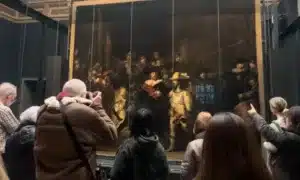
Love museums? Amsterdam has all kinds: art, history, science, photography and some wonderfully specific ones. Choose whatever vibes with you. Our guide to alternative things to do in Amsterdam includes some smaller favourites.
Want to be entertained? Try Fabrique des Lumières in Westerpark for immersive art, the A’DAM Lookout across the IJ for views (and a swing over the edge, if you dare), or THIS IS HOLLAND for a flying-theatre trip across the country.
A foodie? Consider a food tour, or explore at your own pace with our Self-Guided Food Tour de Jordaan.
Of course, there will often still be space closer to the date. But in high season, weekends and holidays, the best time slots go first. Two to four weeks ahead keeps you on the safe side.
Just Before You Fly
Plan How You’ll Get From the Airport to Your Hotel
Figure this out before you come. Standing in the arrivals hall at Schiphol, tired, with your suitcase, is not the moment you want to start researching.
You have a few options: the bus, the train or a taxi. My favourite is the train. It’s quick, easy and takes you straight into the city.
Just take a few minutes before your trip to work out which option suits your hotel best. Our guide to getting from Amsterdam Airport to the city centre explains every option.
Check Your Bank Card and the Weather
You can pay for trams, buses and the metro by tapping your contactless bank card or phone, so make sure your card works for contactless payments abroad. American Express isn’t accepted at the card readers.
And check the forecast. Amsterdam weather changes quickly, so pack layers, a windproof rain jacket and really comfortable walking shoes.
Once You’re in Amsterdam
Amsterdam Is Smaller Than You Think
This is the big revelation for most first-timers.
In London, getting from one side of the city to the other is a genuine journey. Amsterdam is different. The centre is tiny. Crossing a large part of the city by tram or metro often takes around 30 minutes, and most of the places you’ve saved on your map are much closer together than you think.
And Amsterdam doesn’t really have one huge monument. No Eiffel Tower. No Colosseum. In a way, the historic centre is the monument: the canals, the bridges, the narrow streets and hundreds of slightly wonky houses leaning politely against each other.
That means the city between the attractions is part of the attraction. You can walk a lot here, and you should.
Plan by Neighbourhood. Don’t Zigzag.

Because the city is compact, it’s tempting to just go wherever, whenever. But the smartest way to explore is by neighbourhood.
Old City Centre: Amsterdam at its oldest, grandest and busiest.
Canal Belt and Nine Streets: the postcard bit, made for wandering.
Jordaan: pretty little streets, canals, independent shops and great places to eat.
Museum Quarter: the Rijksmuseum, Van Gogh Museum and Stedelijk, all close together.
De Pijp: international, lively and very good for food, with Albert Cuyp Market.
Oost and De Plantage: parks, quieter streets, Artis, the Hortus Botanicus and great food around the Javastraat.
Oud-West and Westerpark: lively, local Amsterdam with great food and green space.
Noord: across the IJ by free ferry. Creative, modern and completely different from the canal belt.
Combine areas that sit next to each other, like the Old Centre and the Jordaan, the Museum Quarter and De Pijp, or Oost and De Plantage.
Can you cross Amsterdam three times in a day? Of course. This isn’t Australia. But why spend your holiday staring at Google Maps at a tram stop?
The Smart Amsterdam Day
My formula: maximum two areas + two main activities + good food + time to wander.
Two activities? Absolutely. Seven reservations? Please don’t.
Here’s how that can look:
Old Centre + Jordaan: a walking tour in the morning, lunch in the Jordaan, an afternoon wandering around the Bloemgracht and Noordermarkt, then a canal cruise or the Anne Frank House. Around five, one drink in a brown café like Café Papeneiland or Café ’t Smalle. Dinner five minutes away.
Museum Quarter + De Pijp: one major museum in the morning (the Rijksmuseum or Van Gogh, not both), lunch at Albert Cuyp Market, then De Pijp’s side streets and Sarphatipark. A terrace on Gerard Douplein around five, dinner in the neighbourhood.
Old Centre + Noord: the Royal Palace or the Amsterdam Museum in the morning, then the free ferry from behind Centraal Station. In Noord, choose STRAAT Museum, the Eye Filmmuseum or the A’DAM Lookout, and take the ferry back with the city lit up in front of you.
One hop maximum. Everything else on foot. Wondering how many days you need? Read how many days to spend in Amsterdam.
What You Don’t Need to Book
Markets, brown cafés, neighbourhood wandering, coffee, shopping and sitting by a canal. Leave those open.
Amsterdam rewards people who plan intelligently. It does not reward people who schedule a 09:10 coffee, a 09:42 bridge photo and a 10:07 stroopwafel.
Book the things that matter. Leave gaps between them.
Eat Something That Tells You Where You Are
You have to eat anyway. You may as well learn something about Amsterdam while you’re at it.
Understand your coffee. In Amsterdam, coffee, specialty coffee and a coffeeshop are three very different plans. A coffeeshop sells cannabis. Mix up the first two? Fine. The first and the third? Very different afternoon.
Have a drink in a brown café around five. Not brown because it’s dirty, but because of decades of smoke, dark wood and questionable lighting. Order bitterballen: crispy outside, molten ragout inside, mustard on the side.
Try Indonesian and Surinamese food. They’re part of Amsterdam’s story, shaped by colonial history and migration. Start with an Indonesian rijsttafel: lots of small dishes, lots of flavours.
Be brave: eat the herring. Raw, lightly salted, with onions and pickles. Not ready? Order kibbeling, fried fish with sauce: the gateway fish.
Visit a market. Albert Cuyp Market in De Pijp (Monday to Saturday) or the Noordermarkt and Lindengracht market in the Jordaan on Saturday morning. At the Lindengracht market, go for the satay. That’s the one I actually queue for. More in our guide to the best Amsterdam food markets.
Walk into a supermarket. Seriously. An Albert Heijn tells you more about ordinary Dutch life than any souvenir shop.
Getting Around: Walk First
Walking isn’t transport here. It’s sightseeing.
For longer distances, use trams, the metro or the free ferries to Noord. Tap your contactless bank card or phone when you get on and off, and remember to check in and check out every single time, or you’ll pay a penalty fare. More in our guide to Amsterdam public transport for tourists.
And bikes? Only rent one if you’re a confident cyclist. Cycling here isn’t a cute tourist activity. It’s traffic. Nervous or mainly after the photo? Walk. Take the tram. You’ll be fine. Read why bikes rule Amsterdam (and how not to get hit by one) first.
Just don’t turn your trip into an Olympic race. That’s my advice.
See you in Amsterdam.