
A guide for our neighbours: what feels familiar, what doesn’t, and why Amsterdam is worth the short trip north.
Written by Alexandra, Founder of Who Is Amsterdam
Dear Belgian neighbours, welcome.
We share a border, a language (more or less), centuries of history and a surprising number of opinions about each other. We appreciate each other. We respect each other.
And, like all good neighbours, we enjoy teasing each other.
Amsterdam is almost suspiciously easy to reach from Belgium. No flight, no currency exchange, and from Antwerp you’re here in well under two hours by train. That closeness is exactly why it’s easy to underestimate.
Because Amsterdam isn’t just another version of Antwerp, Ghent or Bruges. It has its own mentality, history, architecture and way of life. Close by, yes. The same, no.
So here’s my guide for Belgian visitors: what we’re not going to try to impress you with, what might surprise you, and what’s genuinely worth crossing the border for.
1. Neighbours, Not Twins
People sometimes talk about Belgium and the Netherlands as if one is a slightly rearranged version of the other.
Spend time in both and that idea doesn’t survive very long.
Yes, there is a lot of familiarity. Brick buildings, canals, bicycles, a shared language for many of you, and a long history in the same corner of Europe, the Low Countries.
But our stories split in very different directions: politically, religiously, commercially and in how our cities were built.
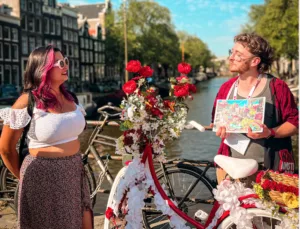
Belgium has set the bar for historic cities inconveniently high, so Amsterdam won’t impress you simply by producing an old building.
What is different is how the pieces work together. Amsterdam’s seventeenth-century canal ring was a huge planned city expansion: marshland drained, building plots created and concentric canals laid out around the old centre. UNESCO calls it an exceptional example of hydraulic engineering and large-scale urban planning.
Water organises the streets. Narrow merchant houses press against it. And even though Amsterdam is a capital, the centre still feels like a collection of neighbourhoods rather than grand boulevards.
That difference is what makes a visit interesting.
2. Let’s Get the Beer and Fries Out of the Way
Let’s be honest. Belgians are not coming to Amsterdam because they desperately need us to introduce them to beer and fries.
Amsterdam has a proud beer and fries culture, and we have some excellent examples of both. But trying to impress Belgians with those two things feels a little ambitious. 😂

I’ve told Belgian visitors that I actually like Heineken.
What I got back was that wonderfully polite, but very clear, Belgian smile.
Nobody needed to say anything. I understood perfectly.
And fair enough! I’ve been to Belgium, I’ve tasted your beers, and I have absolutely no intention of starting a debate about whose beer is better.
I know when to choose my battles.
The same goes for fries. We are not going to discuss who invented them. We are not going to discuss mayonnaise. We are simply going to agree that you know what you’re doing.
The point isn’t that Amsterdam doesn’t have good beer or fries. It’s that we have so many other things to offer you.
3. Jenever: The Drink We Won’t Fight Over Either
If there is one drink that sums up our relationship, it’s jenever.
This juniper spirit has centuries of history across the Low Countries, in what is now both Belgium and the Netherlands. Hasselt has its jenever museum, Schiedam has its distilleries, and both sides of the border have been making and drinking it for a very long time.
So whose drink is it? Let’s just say it’s ours. Plural. We’ve already avoided one argument about beer, and we’d like to keep the streak going.
I’m not going to pretend you’ve never seen a jenever glass before. But drinking it in Amsterdam comes with its own ritual.
Order one during a borrel, the very Dutch late-afternoon drinks moment with friends or colleagues. The glass is filled right to the brim, so the first sip is traditionally taken bending over the bar, hands behind your back.
Add a plate of bitterballen and you’ve experienced a proper Amsterdam borrel. It’s the cultural moment, not the drink itself, that you won’t find at home.
4. Dutch Directness: Not Always Rude (Although Sometimes, Yes)
This is the difference Belgian visitors notice most.
Dutch directness, especially in Amsterdam, can come across as rude.
And sometimes, frankly, it actually is rude. We don’t need to defend everything by calling it a cultural difference. 😂
But often it’s simply a different communication style. We tend to get to the point quickly. Flemish communication is often more diplomatic and indirect, and Brussels and Wallonia have their own styles again, so there’s no single Belgian reaction. Still, a few situations might feel familiar:
- You ask a shop assistant if they have something in another size. The answer is “No.” Full stop. No apology, no alternative, no story.
- You ask a Dutch friend whether they like your new jacket. They tell you. Honestly. You did ask.
- In a meeting, a Dutch colleague says “I don’t agree” to their manager, and nobody in the room seems shocked.
- A Belgian “we’ll see” means a polite no. A Dutch “we’ll see” means… we’ll actually see. And a Dutch no just means no.
Hierarchy feels flatter here, first names come quickly, and people disagree openly while keeping the tone casual.
Once you know that directness isn’t automatically hostility, it can be quite refreshing. You always know where you stand.
You’ll notice it in restaurants too. Staff may leave you alone for a long time. You haven’t been forgotten. You’re being allowed to sit there. When you want the bill, just ask for it.
As for language: Dutch-speaking Belgians will understand almost everything, even if some words and the tone feel distinctly Dutch. French-speaking visitors shouldn’t expect French to be the default. In central Amsterdam, English is usually the easiest shared language.
5. What You Should Actually Come to Amsterdam For
Enough teasing. Here’s what we would genuinely love to show you.
The Canal Belt and the Jordaan
Walk the historic canal belt, then wander into the Jordaan.
The Jordaan started as a working-class neighbourhood just outside the wealthy merchant canals. Today it’s much more expensive, but its small houses, narrow streets and old cafés still feel different from the grand canals next door.
Want someone to make it all click? Our Hello Amsterdam Walking Tour is a great introduction to the city’s history, culture and mentality. It runs for two hours from Dam Square through the canal belt and finishes near Westerkerk and the Anne Frank House.
The Rijksmuseum or One of Our Smaller Museums
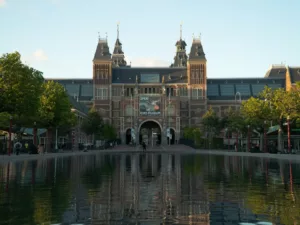
The Rijksmuseum tells the story of the Dutch Republic: art, trade, wealth and the complicated history behind it. For Belgian visitors it adds an interesting neighbourly perspective. Our geography is close, but our histories took very different paths.
Pick one big museum per day. Nobody needs the Rijksmuseum and Van Gogh back-to-back.
Prefer something smaller? Our alternative things to do in Amsterdam includes some of our favourite lesser-known spots.
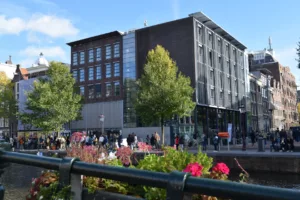
If the Anne Frank House matters to you, book through the official website as early as possible. Afterwards, walk along Prinsengracht and give yourself a moment before moving on to something louder.
The City From the Water
Take a canal cruise. From the water, you see the architecture at the level it was designed to be seen, including details you’d miss from the pavement. A late-afternoon cruise is a lovely way to end a first day.
Indonesian and Surinamese Food
This is where Amsterdam really becomes Amsterdam.
Indonesian food is deeply connected to Dutch colonial history. Surinamese food is part of everyday Amsterdam in a way many visitors don’t expect. Turkish, Moroccan and many other communities have shaped the food culture in our neighbourhoods too.
Order a rijsttafel, a Surinamese roti or a broodje pom. That lunch will teach you more about modern Amsterdam than any plate of fries ever could.
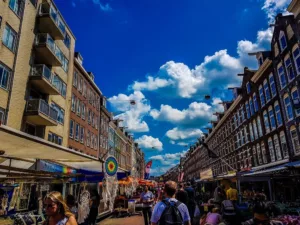
Markets are a great place to start. Albert Cuyp Market in De Pijp has more than 260 stalls, from herring and fresh stroopwafels to Surinamese roti and Vietnamese food. Dappermarkt in Oost is less polished and more local. Read more in our guide to Amsterdam food markets.
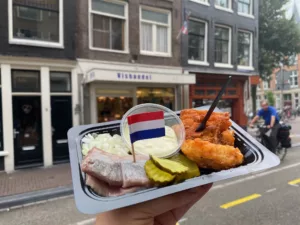
Or let lunch become the walk. Our Self-Guided Food Tour de Jordaan takes you to six local stops at your own pace. The walking is only twenty to thirty minutes in total, so most of your time goes into eating.
An Afternoon in a Brown Café
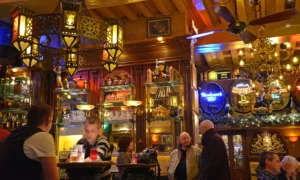
Belgium understands cafés. But a Dutch bruin café is not a Belgian café with darker walls.
These are neighbourhood institutions with dark wood, regulars, beer, jenever and interiors that have survived several generations of design advice by ignoring all of it. This is the place for your borrel.
Amsterdam Noord
Take the free ferry behind Centraal Station across the IJ. In just a few minutes you go from seventeenth-century canals to former shipyards, street art and the striking EYE Filmmuseum.
It’s the easiest way to see that Amsterdam didn’t stop developing in 1700.
Live Music, Culture and Nightlife
You don’t need a lecture from us on going out for drinks. What’s worth knowing is the range.
Live shows at Paradiso and Melkweg. Jazz at Bimhuis or Jazz Café Alto. Stories, spoken word and music at Mezrab or Tellers Playground. And one of Europe’s best-known electronic music scenes.
Leidseplein and Rembrandtplein are convenient, but they’re not the whole city after dark.
Cycling: Your Flemish Experience Helps, But…
If you cycle a lot in Flanders, you’ll feel more prepared than most visitors. But Amsterdam’s bike lanes are traffic. People are commuting, taking children to school and carrying their shopping at full speed.
Standing in the bike lane for a photo is like standing in the middle of the road because the building opposite looked nice.
6. How I’d Spend a Long Weekend in Amsterdam From Belgium
Amsterdam is close enough to come back, so don’t treat the trip like a once-in-a-lifetime expedition. Three days can hold a proper city rather than seventeen attractions.
Friday: Arrive, Get Oriented, Stay West
Take a morning train, drop your luggage and have lunch in the centre.
Our Hello Amsterdam Walking Tour starts at 15:00, which works perfectly if you arrive early enough. You don’t need a guide all weekend. You need someone to make the city click once.
The tour ends near Westerkerk, so continue into the Jordaan. Walk Bloemgracht and Egelantiersgracht, then find dinner or a brown café nearby.
Saturday: One Museum, De Pijp and an Amsterdam Evening
Book your museum for the morning. Then walk to De Pijp and graze your way through Albert Cuyp Market and the streets around Sarphatipark.
Make tonight your Indonesian or Surinamese dinner. Then choose your evening by mood: live music, jazz, storytelling or a neighbourhood terrace.
Sunday: Noord, or One More Story
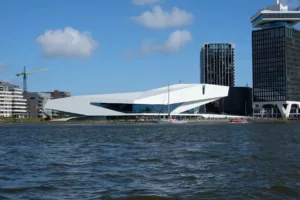
After a slow breakfast, take the ferry to Noord for EYE, NDSM and a completely different side of the city.
Or, if you want to go deeper into the people of this city, join our Humans of Amsterdam tour. Check the tour schedule to see whether it fits your weekend.
Then catch your train home with three different versions of Amsterdam in your head instead of nine attractions blurring together.
7. Getting Here From Belgium
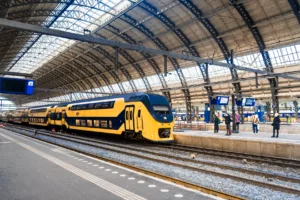
The train is the obvious choice.
The Eurocity Direct runs between Brussels and Amsterdam up to sixteen times a day. It takes about 2 hours 8 minutes from Brussels and about 1 hour 23 minutes from Antwerp. Book early for the cheapest Saver fares, as they’re limited.
Good to know: Eurocity Direct arrives at Amsterdam Zuid, not Centraal. That’s no problem. Metro 52 takes you from Zuid to the centre quickly.
Eurostar is slightly faster, at around 1 hour 56 minutes from Brussels and 1 hour 15 minutes from Antwerp, but usually more expensive. Check current times and fares at NS International.
Bring a valid ID. Belgian citizens can travel within the EU with a valid eID. Children under twelve need their own travel document, such as a Kids-ID or passport. See the Belgian government’s travel-document guidance.
Dear Belgian Neighbours
We’re not going to try to convince you that our beer is better. We’re certainly not going to start a discussion about fries.
And when an Amsterdammer sounds a little too direct, remember that we’re not always trying to be rude. Although occasionally, we might need to work on our delivery.
But we’d absolutely love to welcome you to our city.
But if you’re planning a trip to Amsterdam from Belgium, come for the canals, the museums, the boat rides, the neighbourhoods, the food, the people. Discover what makes Amsterdam different, even though we’re practically around the corner.
And the best thing about being neighbours? You can always come back.