
There is a moment that happens to almost everyone who visits Amsterdam alone for the first time.
You are somewhere along the Prinsengracht. Early evening. The light has gone that specific golden colour it does in summer, and you realise you are not waiting for anyone to catch up, not negotiating where to go next. You are just here.
I know that feeling very well, because my own Amsterdam story started almost exactly that way.
I am Alex, the founder of Who Is Amsterdam Tours. I grew up in Germany and first came to Amsterdam around 20 years ago for an internship. I did not know anybody here. No friends. No family. I arrived completely on my own.
During the day I was working, but outside of my internship I was essentially a solo traveller discovering Amsterdam for the first time. I sat in cafés by myself. I went for dinner by myself. I wandered the canals, took trams to places I had never heard of, and slowly learned the rhythm of the city. Then, 18 years ago, I made Amsterdam my permanent home.
That personal experience is the reason I can write this honestly. Amsterdam is not perfect, and no city is completely without risk, but I never had a moment where I genuinely felt unsafe here. What I found instead was a city that makes being alone feel normal, easy and, often, surprisingly social.
Is Amsterdam good for solo travel? The honest answer

Yes. Amsterdam is one of the easiest and most naturally solo-friendly cities in Europe.
You can walk from one neighbourhood to another in twenty minutes. Most of the city’s best things – the canals, markets, parks, museums, brown cafés and independent shops – sit within a compact area. You do not need a car. You do not need a group. You do not need to over-plan every hour to have a genuinely good day here.
English is spoken widely and fluently. Public transport is easy once you understand the basics. The centre is well-lit at night, and there are usually other people around without the city feeling overwhelming.
But the bigger thing is harder to measure: Amsterdam is a city where being alone in public does not read as sad or strange. People eat at bars by themselves. They sit on canal edges alone with a beer on a Friday evening. They spend two hours in one room of the Rijksmuseum without anyone thinking that is unusual.
When I first arrived, I often went out on my own. Nobody looked at me like I was strange for doing it. If anything, people were curious. If someone notices you are travelling alone, the reaction is usually more like: ‘Oh, cool. Tell me more.’
That is very Amsterdam. The Dutch mentality is: you do you, I do me. It is not a city where people judge you for being on your own.
If you have been nervous about navigating a foreign city alone for the first time, Amsterdam is genuinely one of the easier places to start.
Is Amsterdam safe for solo travellers?
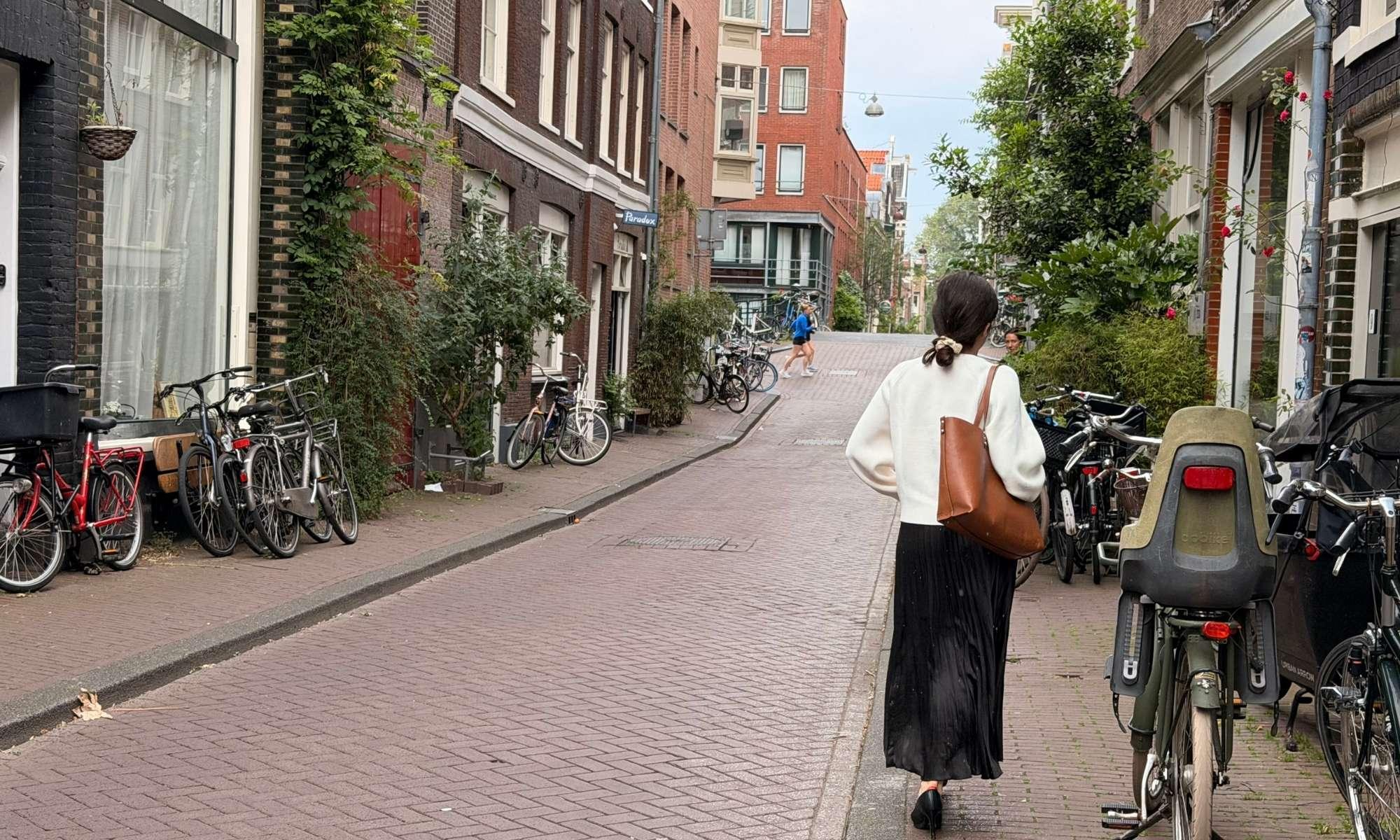
In my experience, yes. Amsterdam is generally very safe for solo travellers, including solo female travellers.
As a woman, I regularly walked home alone at night when I first lived here. Naturally, I used common sense. I would not stand alone at a very visible ATM at 2am, for example. But that is the same advice I would give in any city in the world.
Of course, sometimes you see things. Someone who has had too much to drink. Occasionally a homeless person talking to themselves. Very occasionally somebody having an argument with themselves on the street. But those situations are quite rare and, in my experience, they almost always keep to themselves. I never experienced them as threatening.
What always stood out to me was that there were usually other people around, people were aware of their surroundings, and there was a general feeling of safety. Amsterdam is not a city where I felt I had to move through the streets on high alert.
That said, a few practical things are worth knowing. Pickpocketing can happen around Centraal Station, Damrak, Leidseplein and on busy trams. Keep your phone in a front pocket or zipped bag, and do not leave your jacket or handbag hanging over a chair while you order at the bar.
The Red Light District is fine to walk through, and it is usually busy and patrolled, but late at night it attracts drunk crowds. It is not necessarily dangerous, but it can feel messy. If you are travelling alone and do not enjoy that atmosphere, go earlier in the evening or skip it altogether.
Neighbourhood-wise, I would avoid making Amsterdam sound more alarming than it is. Areas such as Zuidoost or parts of Nieuw-West can have higher crime statistics than the old centre, but compared with many large international cities they are still relatively safe. Most visitors do not need to avoid them completely; they just need the same common sense they would use anywhere unfamiliar.
That is genuinely the extent of it. Amsterdam is not a city that requires you to be suspicious of everyone around you. You can be a person here, not a target.
Getting around: what you actually need to know
From Schiphol airport: Take the train to Amsterdam Centraal. It takes around fifteen to twenty minutes, runs constantly and is usually the easiest option. You do not need to book a private transfer unless you have a very specific reason.
Around the city: Trams, metros and buses are simple once you have done one journey. You tap in and out with a contactless card, mobile wallet or public transport card. Just remember to tap out as well as in.
Apps to download: Download 9292 before you arrive. It is the local public transport app and is excellent for tram, metro and bus routes. Google Maps also works very well in Amsterdam, especially for walking routes. The GVB app is useful for official real-time Amsterdam transit information.
Public toilets: Download HogeNood. It helps you find nearby public toilets, which sounds like a small thing until you are travelling alone, carrying a bag and do not want to wander into five cafés asking awkwardly.
Bikes: Yes, Amsterdam is a cycling city, and yes, renting a bike can be brilliant. But the lanes move fast and the rules are specific. If you are confident cycling in busy city traffic, go for it. If you are not, walking and trams will get you almost everywhere without the stress.
The Noord ferry: It is free, leaves from behind Centraal Station, and crosses the IJ in minutes. Most tourists miss it entirely, which is exactly why you should not.
Where to stay and what each neighbourhood is actually like
The neighbourhood you pick shapes the trip more than the hotel does.
Jordaan is the best base if budget allows. It has boutique hotels, canal house guesthouses, quiet streets at night and easy walking access to almost everything. The Bloemgracht is one of the quieter canals, lined with houseboats. Café ‘t Smalle on the Egelantiersgracht has been here since it was an 18th-century jenever distillery. Order a jenever, watch the boats, and go on a weekday if you can.
De Pijp is the local choice and often better value. It is less touristy, full of good food, and connected to the centre by tram and metro. The Albert Cuyp Market runs through the middle of it most days, with warm stroopwafels, herring, kibbeling and fruit stalls. It is one of the easiest neighbourhoods to enjoy alone because you can graze, wander and stop whenever you want.
Amsterdam Oost is the one that surprises people. It is quieter, more residential and full of independent cafés, with Oosterpark on its doorstep. It works well if you want to feel less like a tourist and more like someone borrowing the city for a few days.
Amsterdam Noord is not always the most convenient place to stay for a first visit, but it is worth half a day. Take the free ferry from behind Centraal Station. NDSM Wharf is a former shipbuilding yard, now covered in murals and home to big open spaces, waterside bars and creative venues. Pllek, the container bar on the waterfront, is a good place to sit alone without feeling alone.
Leidseplein and Museum Quarter can work if you want to be close to nightlife or museums, but expect more visitors and higher prices. If you are a light sleeper, check exactly where the hotel is before booking.
If budget is the priority, hostels in the Jordaan, De Pijp and around Leidseplein offer private rooms alongside dorms and tend to have the best social atmosphere. Book early for summer. Amsterdam accommodation fills up fast and prices rise sharply in July and August.
Things that are genuinely better when you’re alone
Walk the canals with no plan. Amsterdam’s canal belt was built in concentric rings, so almost any direction pulls you along water. Start on the Brouwersgracht, walk south through the Jordaan and let yourself be distracted. The corner of Reguliersgracht is where several bridges line up in a row. Come back early in the morning if you can; the canals are still, the bridges are empty and the city feels like it belongs to the people awake enough to notice it.
Spend a morning at the Rijksmuseum. Book the first slot, go at your own pace and stay in front of something for as long as you want. The Night Watch is bigger than you expect. The Van Gogh Museum is just across the square if you have the appetite for a second museum, but do not rush either.
Book the big things in advance. The Anne Frank House especially needs planning, often months ahead in summer. If you are travelling alone, early slots are usually the nicest because the city is still waking up around you.
Graze through the Albert Cuyp Market. Warm stroopwafels, herring, kibbeling in paper cones, coffee, fruit, cheese, another coffee. An entire morning handled without sitting down once.
Sit in a brown café for a few hours. Order bitterballen and a beer. Read something. Watch the street. Nobody will rush you. This is genuinely what locals do on a weekday afternoon, and it is one of the better ways to spend two hours in Amsterdam.
For a fuller picture of what the city looks like across a week, the Who Is Amsterdam summer guide covers the seasonal rhythm in more detail.
Eating alone here is not the problem you think it is

One of the nicest things about Amsterdam is how normal it is to eat alone.
When I first arrived, I went to cafés by myself, had dinner by myself and went for drinks by myself. Nobody treated that as strange. Actually, people were often open and curious. Sometimes a conversation started. Sometimes it did not. Both were fine.
Albert Cuyp Market handles breakfast and lunch most days. Graze through the stalls, eat while walking, then find a bench. The herring from a street cart is the one you are supposed to try at least once.
Brown cafés are made for solo travellers. Café ‘t Smalle in the Jordaan and Café de Sluyswacht near the Rembrandthuis both have that dark wood, low ceiling, stay-as-long-as-you-like feeling. Sit at the bar. Nobody is watching you or waiting for you to leave.
Indonesian food is worth seeking out specifically. The Dutch colonial history means Amsterdam has excellent Indonesian restaurants, including rijsttafel places that are part meal, part event. Order it solo if you want. It is a lot of food. That is not a problem.
Albert Heijn supermarkets are the honest tip nobody includes. Good cheese, bread, olives, fruit, something cold. Turn it into a picnic and take it to a canal bench or park. Cheap, local, easy, zero judgment.
If you are worried that eating alone will make you feel exposed, Amsterdam is a good city to prove the opposite. Here, it often just feels practical.
If you want to meet people, it’s very easy

Solo travel in Amsterdam does not have to mean spending the whole trip alone. The city has an unusually active social infrastructure for travellers who want it.
It is also chattier than many people expect. Sometimes visitors imagine Northern Europe as cold or distant, but that was never my experience of Amsterdam. I have had conversations at tram stops, on trams, in cafés, on terraces, in parks and while waiting in line somewhere. People overhear something interesting and jump into the conversation. Obviously only if you seem open to it, but it happens all the time.
That is why I often describe Amsterdam as a cosmopolitan village. It is a major international city, but somehow it still feels small and human.
Free walking tours are the easiest entry point. They leave from Dam Square daily, attract other solo travellers and give you an orientation to the city plus a built-in excuse to talk to people. Go on your first day.
Small group tours work particularly well here. A walking tour of the Jordaan, a canal cruise, a food tour through De Pijp – these are social by nature without feeling forced. The Who Is Amsterdam tours run in small groups and focus on the neighbourhoods worth knowing, not just the places a map could have found for you.
Meetup.com and Couchsurfing events list regular gatherings such as language exchanges, photography walks and expat meetups. Amsterdam has a large international community, so it is rarely difficult to find something casual to join.
Parks and terraces are also social in a very Amsterdam way. You can be alone with a book, and five minutes later be chatting to someone about the weather, their dog or why your Dutch pronunciation is almost right but not quite.
The parks are where you actually want to be

Amsterdammers do not spend their summers only in museums. They spend them horizontal in parks, possibly with a speaker playing something questionable and a picnic that started as one drink and became four hours.
Vondelpark has a free open-air theatre running in summer, with music, comedy and theatre. On a warm Friday evening the whole park feels like a concert hall, picnic and social club happening at once. It is one of the best places in the city to be alone without feeling lonely.
Westerpark is the local version. The old gasworks area is now cafés, markets, concerts and weekend events. It is less chaotic than Vondelpark and often more interesting.
Oosterpark is relaxed, green and easy if you are staying in Oost or De Pijp. It is a good place to read, people-watch or take a quiet pause without going far from the city.
Amsterdamse Bos is for when you actually need space. Technically a forest rather than a park, and enormous. You can swim, rent a canoe or disappear into the trees for a while.
Practical things to know before you go
- Download 9292. It is the best app for public transport routes and real-time tram, bus and metro information.
- Use Google Maps. It works very well for walking, cycling and general navigation around the city.
- Download HogeNood. It is excellent for finding public toilets nearby, which can be surprisingly useful when you are exploring alone.
- Keep common sense switched on. Amsterdam is generally very safe, but do not flash your phone near busy stations, leave bags unattended or use visible ATMs late at night.
- Bring a card. Amsterdam is largely cashless. Most restaurants, markets and street stalls accept card or contactless payments. Keep a little cash just in case.
- Tap water is safe. Bring a refillable bottle and use it.
- Tipping is simple. Service is generally included. Rounding up or leaving 5-10% for good food or service is appreciated but not expected in the same way as in some countries.
- Book key attractions early. The Anne Frank House, Van Gogh Museum and popular restaurants can sell out, especially in summer.
- Be sensible with coffeeshops. They are part of Amsterdam culture, but they are not a free-for-all. You need valid ID, you must follow the rules, and you should not take anything across a border under any circumstances.
There is a longer list of common mistakes in what not to do in Amsterdam – some obvious, some genuinely not.
One last thing
If Amsterdam teaches solo travellers one thing, it is that being alone does not have to mean being lonely.
That was my experience when I first arrived here 20 years ago, knowing nobody, learning the city one walk, tram ride, café and conversation at a time. Amsterdam gave me space to be by myself, but it also kept offering small reminders that people were nearby if I wanted them.
That is still what I love about the city now. It is international, open, practical and full of movement, but it still has moments that feel personal. A chat at a tram stop. A quiet beer in a brown café. A canal bench where nobody cares whether you arrived with someone or not.
If you want to see the city with someone who actually lives here, the tours at Who Is Amsterdam run in small groups and go to the places worth knowing – the ones a map alone would not have found for you. Questions before you arrive? Get in touch and ask. I know what it feels like to arrive here alone, and I promise, Amsterdam is a very good place to begin.